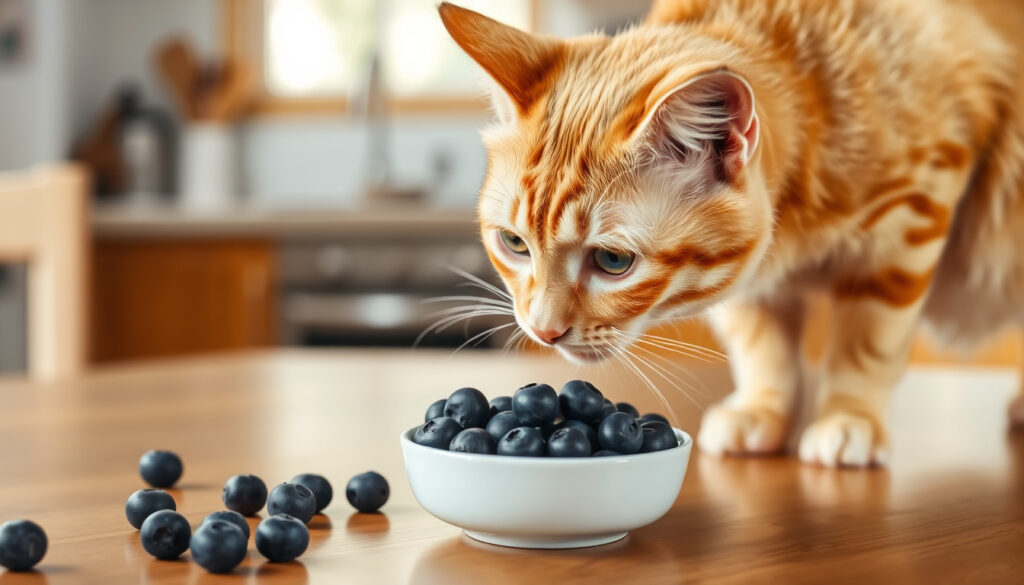
Can Cats Have Blueberries? Complete Safety Guide 2025
You’re standing in the kitchen, a bowl of fresh blueberries in hand, and your cat looks up with those big, curious eyes. Before you share, here’s what veterinary nutrition experts want you to know: blueberries are safe for cats, but only in careful moderation. Serving sizes, preparation steps, toxic fruits to avoid, and the special precautions needed for kittens are covered below.
Blueberry safety for cats: Non-toxic in small quantities (PetMD veterinary guide) ·
Daily treat limit: 90% of diet must be balanced cat food (Purina US) ·
Toxic fruits to avoid: Grapes, raisins, citrus, and cherries (PetMD) ·
Primary risk factor: Choking and digestive upset from seeds or large pieces
Quick snapshot
- Blueberries are non-toxic for cats (Hill’s Pet Nutrition)
- Treats should not exceed 10% of daily calories (Purina US)
- Grapes and raisins cause kidney failure (PetMD)
- Long-term effects of daily fruit consumption are not widely studied (Hill’s Pet Nutrition)
- Digestive tolerance threshold varies by individual cat (Hill’s Pet Nutrition)
- Introduce one blueberry as a single test (PetMD)
- No more than 2-3 blueberries per day (Purina US)
- Watch for digestive upset after first feeding
- Consult vet before adding any fruit to a kitten’s diet
Here are the key facts every cat owner needs to know about blueberries.
| Factor | Details |
|---|---|
| Toxicity status | Non-toxic (ASPCA Animal Poison Control) |
| Recommended serving size | 1-2 blueberries per day (Purina US) |
| Diet percentage allowed | Maximum 10% of daily calories (Hill’s Pet Nutrition) |
| Common toxic fruit | Grapes and raisins cause kidney failure |
| Best berry alternative | Strawberries (low calorie, high fiber) (PetMD) |
Can cats have blueberries?
Yes, cats can eat blueberries, but the answer comes with several important conditions. Veterinary nutrition experts agree that blueberries are non-toxic for felines when fed as an occasional treat in small quantities (Hill’s Pet Nutrition). The key is understanding that blueberries are not part of a cat’s natural diet and should never replace balanced cat food.
Are blueberries safe for cats?
- Blueberries contain no compounds toxic to cats (ASPCA)
- Fresh or frozen blueberries are preferred; avoid canned or dried versions that may contain added sugar (PetMD)
- Whole blueberries can pose a choking risk, especially for smaller cats (Hill’s Pet Nutrition)
- Always wash blueberries and remove stems or leaves before serving (PetMD)
What quantity is safe?
- Start with one blueberry to see how your cat reacts (PetMD)
- For most adult cats, two to three blueberries a day is considered fine (Purina US)
- Treats, including blueberries, should be limited to no more than 10% of a cat’s daily food intake (Chewy’s veterinary education team)
- Eating too many blueberries may upset a cat’s stomach because blueberries are high in fiber (Hill’s Pet Nutrition)
The 10% treat rule means a single blueberry can account for nearly a full day’s treat allowance for a 10-pound cat. Overfeeding even safe fruits can unbalance a cat’s nutrition and lead to weight gain.
The pattern: safe does not mean unlimited. A cat’s digestive system is designed for protein and fat, not fruit fiber and sugar. Monitor your cat’s reaction, and cut blueberries into smaller pieces if your cat tends to swallow food whole.
What fruits are toxic to cats?
While blueberries get the green light, several common fruits can be dangerous or even fatal to cats. Knowing which fruits to keep out of reach is just as important as knowing which ones are safe.
Which fruits cause poisoning?
- Grapes and raisins are associated with acute kidney failure in cats (PetMD)
- Citrus fruits (oranges, lemons, limes) contain essential oils that cause digestive upset (Purina US)
- Cherries with pits contain cyanide compounds that are toxic to cats (PetMD)
- Figs can cause skin and mouth irritation
- Green tomatoes contain solanine, which is toxic to felines
How do toxic fruits affect cats?
- Grapes and raisins: Can cause vomiting, lethargy, and kidney damage within 24 hours of ingestion
- Citrus: The psoralens and essential oils in citrus fruits can cause depression, drooling, and vomiting
- Cherries: Cyanide poisoning symptoms include difficulty breathing, dilated pupils, and red gums
A cat that eats one grape may show no symptoms; a cat that eats several could face irreversible kidney damage. Because individual tolerance varies, the safest approach is to keep all listed toxic fruits completely out of reach.
The implication: toxic fruits share no single pattern — some (grapes) affect kidneys, others (citrus, cherries) affect the nervous system or digestive tract. Keeping a complete list of dangerous foods posted in the kitchen is a simple step that can prevent emergency vet visits.
What is the healthiest fruit for a cat?
Among the fruits that are safe for cats, blueberries hold a strong position because of their nutritional profile. But how do they compare to other safe fruit options?
What are the nutritional benefits of blueberries?
- Blueberries are high in antioxidants, which may help reduce inflammation (PetMD)
- They contain vitamin C, vitamin K, and fiber
- Blueberries are low in calories — a single blueberry contains about 1 calorie
- The fiber content can aid digestion when fed in small amounts
How do blueberries compare to other safe fruits?
- Strawberries: Low in calories (about 4 calories per berry), high in fiber, and contain vitamin C (PetMD)
- Blackberries: Similar antioxidant profile to blueberries, with slightly more fiber
- Watermelon (seedless): High water content helps with hydration, but offers fewer nutrients than blueberries
- Cantaloupe: Low in calories, contains beta-carotene, but higher in natural sugar than blueberries
This comparison highlights the differences between safe fruit options.
| Fruit | Calories per serving (1 oz) | Fiber (g) | Antioxidant content | Safe serving size (cat) |
|---|---|---|---|---|
| Blueberries | 16 | 0.6 | High | 1-2 berries |
| Strawberries | 9 | 0.5 | Moderate | 1 small berry |
| Watermelon | 9 | 0.1 | Low | 1-inch cube |
| Cantaloupe | 12 | 0.3 | Moderate | 1-inch cube |
The catch: no fruit provides essential nutrients that a cat cannot get from a high-quality commercial diet. The healthiest approach is to treat fruit as a novelty — a small piece occasionally — rather than a dietary staple.
Can kittens eat blueberries?
Kittens have more sensitive digestive systems than adult cats, so extra caution is needed when introducing any new treat, including blueberries.
When can kittens start eating fruit?
- Kittens can have the occasional blueberry after weaning, generally around 8 weeks of age (Hill’s Pet Nutrition)
- Excessive amounts of fruit are not recommended for kittens (Hill’s Pet Nutrition)
- A kitten’s digestive tract is still developing — fiber-rich foods can cause diarrhea or upset stomach
What precautions should you take?
- Start with a quarter of a blueberry, mashed or cut into tiny pieces
- Avoid whole blueberries — kittens are more prone to choking because of their smaller throat size (PetMD)
- Consult a veterinarian before introducing any new treat to a kitten’s diet
- Monitor for signs of digestive upset: vomiting, diarrhea, or loss of appetite
A kitten that eats too many high-fiber blueberries may develop diarrhea, which can quickly lead to dehydration in young animals. If diarrhea persists for more than 12 hours after feeding, contact your vet immediately.
The pattern: the same “start small” rule that applies to adult cats is even more critical for kittens. Their bodies are still learning to process foods beyond milk and specially formulated kitten food.
Can cats have blueberries every day?
Technically yes, but in practice, daily feeding requires strict portion discipline. The risks of overfeeding extend beyond a simple upset stomach.
What is the daily treat limit?
- No more than 2-3 blueberries per day for an adult cat (Purina US)
- Blueberries should make up less than 10% of a cat’s daily food intake (Hill’s Pet Nutrition)
- 90% of a cat’s diet must consist of a complete and balanced cat food (Purina US)
What are the risks of overfeeding?
- Obesity: Fruits contain natural sugars that add calories without nutritional necessity
- Digestive upset: Too much fiber from blueberries can cause diarrhea or constipation (Hill’s Pet Nutrition)
- Nutritional imbalance: Replacing even 20% of a cat’s food with treats can lead to deficiencies in taurine, vitamin A, and other essential nutrients only found in meat
- Over time, too much sugar (including natural fruit sugar) can contribute to diabetic issues (Rover pet care guide)
The trade-off: daily blueberries are safe only if you maintain the 90/10 rule. If you’re already feeding other treats (commercial cat treats, dental chews, or table scraps), a daily blueberry may push beyond the 10% boundary.
Can cats eat blueberry muffins or blueberry yogurt?
Processed blueberry products pose risks far beyond those of fresh blueberries. The additives, preservatives, and alternative ingredients in these foods are the real concern.
Are processed blueberry products safe?
- Blueberry muffins often contain sugar, butter, raisins, and sometimes chocolate — all dangerous for cats (PetMD)
- Blueberry yogurt may contain xylitol, an artificial sweetener that is toxic to cats
- Even plain yogurt with blueberries can cause digestive upset because many cats are lactose intolerant
- Blueberry jam, pie filling, and canned blueberries contain added sugar and preservatives (PetMD)
Why added sugar is dangerous
- Cats lack the enzyme to efficiently process large amounts of sugar, which can cause vomiting and diarrhea
- Chronic sugar consumption can lead to obesity, diabetes, and dental disease
- Blueberry extract in cat foods can be safe, but it does not provide the same nutritional benefits as a fresh blueberry (PetMD)
If you want to share blueberries with your cat, wash a fresh or frozen blueberry and serve it plain. Any processing — baking, sweetening, or combining with dairy — introduces risks that outweigh any potential benefit.
The pattern: whenever a treat goes through processing, the risk profile changes. Stick to the simplest form of the food, and always check ingredients for hidden dangers like xylitol or raisins.
What is the silent killer of cats?
The term “silent killer” in veterinary medicine refers to conditions that develop slowly and show few symptoms until they’re advanced. Kidney disease, heart disease, and hyperthyroidism are the most common silent killers in cats — and diet plays a significant role in each.
What medical conditions qualify as silent killers?
- Chronic kidney disease: Affects 30-40% of cats over 10 years old; early symptoms (increased thirst, weight loss) are easy to miss (PetMD)
- Hypertrophic cardiomyopathy (heart disease): The most common form of heart disease in cats; often shows no symptoms until the cat goes into heart failure
- Hyperthyroidism: Common in older cats, causes weight loss despite increased appetite, and can lead to heart damage if untreated
How do diet and treats affect cat health?
- Poor diet can exacerbate kidney disease: high-phosphorus foods accelerate kidney damage in susceptible cats
- Obesity from overfeeding treats increases the risk of heart disease and diabetes
- Fruits should never replace balanced nutrition — the 90/10 rule protects against nutritional deficiencies that can worsen underlying conditions
- Regular veterinary checkups are the only reliable way to detect silent killers early
The implication: while a single blueberry won’t cause harm, a long-term pattern of replacing balanced food with treats — even healthy treats — can contribute to the very conditions that become silent killers. The 90/10 rule exists to protect cats from this exact risk.
Confirmed vs. unclear: where the evidence stands
Upsides
- Blueberries are a low-calorie, antioxidant-rich treat option
- Blueberries can encourage hydration when served frozen as a summer treat
- Feeding safe fruits can strengthen the bond between owner and pet
- Blueberries provide fiber that may aid digestion in small amounts
Downsides
- Fruits are not part of a cat’s natural diet, and cats may not process them efficiently (Rover pet care guide)
- Overfeeding can cause obesity, diabetes, and digestive issues over time
- Choking risk exists, especially for kittens and smaller cats (PetMD)
- Long-term effects of daily fruit consumption on cat health are not widely studied
Expert perspectives in their own words
Blueberries are perfectly safe for most cats to eat in small quantities, but there are some potential risks.
PetMD veterinary team
In small quantities, no. Blueberries are safe to eat as a treat. But it’s important to note that 90 percent of a cat’s diet should consist of a complete and balanced cat food.
Purina US nutrition team
The good news: yes, your cat can have blueberries! Knowing which ‘people foods’ are safe for your cat (and which aren’t) is a great way to build trust with your pet.
Hill’s Pet Nutrition expert panel
Most fruits are not problematic for cats, although most cats will not eat fruit in quantity.
Dr. Gary Richter, veterinarian, as quoted by Rover pet care guide
The takeaway from all four sources is consistent: blueberries are safe in moderation, but they are optional. No cat needs fruit, and the priority should always be a high-quality, complete cat food that meets all nutritional requirements.
Related reading: Are Bananas Good for Dogs? · How Many mm in an Inch? Exact Conversion and Fraction Chart
aspca.org, foodforestnursery.com, aspcapetinsurance.com, facebook.com, youtube.com, instagram.com, adoptapet.com
For a detailed breakdown of safe serving sizes and potential risks, check this vet-reviewed guide on blueberries for cats that also covers the nutritional benefits of blueberries for felines.
Frequently asked questions
Can cats eat blueberries?
Yes, in small quantities. Blueberries are non-toxic and safe as an occasional treat. Feed no more than 2-3 blueberries per day for an adult cat, and always wash them first.
How many blueberries can a cat eat?
For most adult cats, 2-3 blueberries per day is considered a safe amount. Start with one blueberry to see how your cat reacts, and never let treats exceed 10% of daily calorie intake.
What fruits are dangerous for cats?
Grapes and raisins can cause acute kidney failure. Citrus fruits (oranges, lemons, limes) cause digestive upset. Cherries with pits contain cyanide. Figs and green tomatoes also pose risks.
Is blueberry yogurt safe for cats?
Not recommended. Many cats are lactose intolerant, and some blueberry yogurts contain xylitol, which is toxic to cats. Even plain yogurt with blueberries can cause digestive upset.
What is the healthiest treat for a cat?
Fresh blueberries, strawberries, or plain cooked chicken (no seasoning) are among the healthiest treat options. However, no treat should ever replace a balanced commercial cat food.
Can kittens have fruit?
Kittens can have small amounts of safe fruits like blueberries after weaning (around 8 weeks). Start with a quarter of a blueberry, mashed or cut into tiny pieces, and always consult your vet first.
How do I feed blueberries to my cat safely?
Wash the blueberry thoroughly, remove any stems or leaves, and cut it in half (or smaller for kittens) to reduce choking risk. Serve plain — no sugar, no spices, no processing. Start with one piece and monitor your cat’s reaction.
Related reading
Are Bananas Good for Dogs? — A parallel guide on safe fruit treats for your canine companion.
More related posts
 Alaska PFD Stimulus September 2025: Eligibility & Payment Dates
 GT vs SRH Match Scorecard 2026: Titans Win by 82 Runs
 Milwaukee Brewers vs Padres Match Player Stats | Game Analysis
 Great British Baking Show 2025: Start Date, Cast & Where to Watch
 Is Frank Ocean Gay – What His 2012 Letter Reveals
 Rocky Horror Picture Show: Cult Classic Guide
 Kevin Porter Jr Stats: Bucks Highs, Career & Injury
 10 Causes of UTIs in Females: Symptoms, Treatment & Prevention