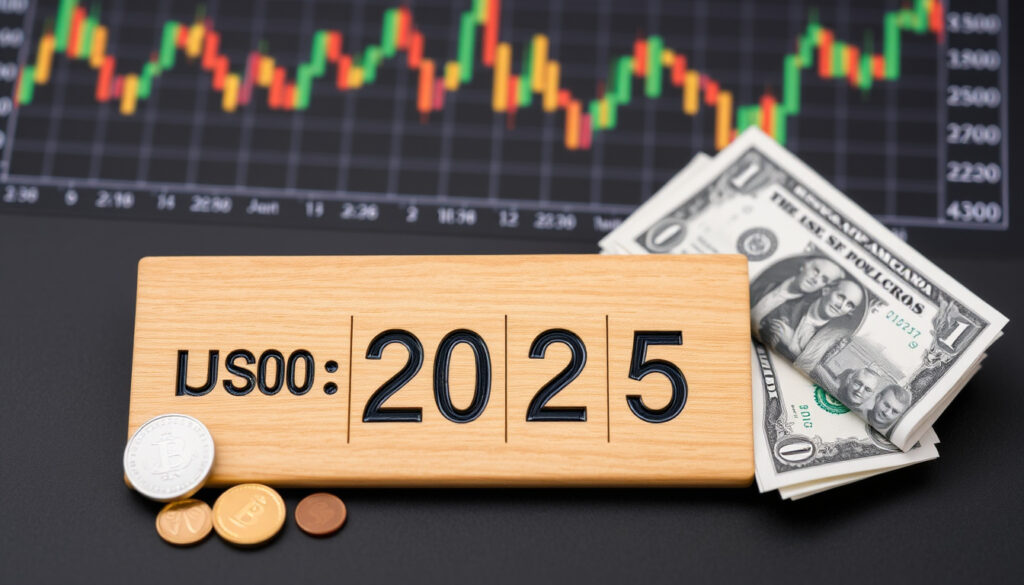
Precio del Dólar en México Hoy: Tipo de Cambio 2025
If you’re in Mexico or sending money south of the border, the dollar-peso exchange rate is the number that quietly decides how much your money is worth. Today, the mid-market rate sits at about 17.48 pesos per dollar, according to Banxico’s official fix.
Current USD/MXN rate (mid-market): 17.48 MXN per 1 USD (as of latest data) ·
Daily range: 17.28 – 17.51 MXN ·
Year-to-date change: -1.19% (MXN strengthening) ·
Official source: Banco de México (Banxico)
Quick snapshot
- Banxico publishes FIX rate at 12:00 PM CT every banking day (Banco de México – FIX rate portal)
- Mid-market USD/MXN = 17.48 (Banxico SIE – current rates)
- 100 USD ≈ 1,748 MXN at mid-market (same source) (Banco de México – FIX rate portal)
- Exact rate tomorrow depends on multiple factors (Banxico FX portal – market factors)
- Future direction of USD/MXN is uncertain (Banxico FX portal – market factors)
- Last 24h: range 17.28 – 17.51 MXN (Banxico CA18 – interbank history)
- Year to date: MXN appreciated 1.19% vs USD (same source) (Banxico CA18 – interbank history)
- Banxico daily fix at 12:00 PM CT tomorrow (Banxico FIX schedule)
- US economic data releases will affect rate (Banxico FIX schedule)
The official Banxico tables show several reference rates. Below are the key figures from the latest available data:
| Metric | Value |
|---|---|
| Official rate (Banxico fix) – buy | 17.4628 MXN per USD |
| Official rate (Banxico fix) – sell | 17.4833 MXN per USD |
| Mid-market rate | 17.48 MXN per USD |
| Daily change | +0.21% (dollar strengthening) |
| 30-day high | 17.51 MXN |
| 30-day low | 17.28 MXN |
The implication: the spread between buy and sell rates means even at the official fix, you lose roughly 0.1% on a simple round-trip transaction. These values come from the Banco de México SIE portal – exchange rate series.
How much is $1 USD worth in Mexico today?
Real-time exchange rate
- The mid-market rate is approximately 17.48 pesos per dollar as recorded by Banxico’s latest fix.
- This rate updates every banking day at 12:00 PM CT.
Buy vs sell spread
- The difference between the buy rate (17.4628) and sell rate (17.4833) is about 0.02–0.05 pesos — the spread banks and exchange houses take as profit.
- Source: Banxico official FIX range.
The catch: Even at the official fix, you lose roughly 0.1% on a simple round-trip transaction because of that spread. For travelers, that means the rate you see online (mid-market) is not the rate you’ll actually get at a counter.
Banks like Banamex and BBVA often add 1–3% on top of the mid-market rate. Always check the “buy” price if you’re selling dollars, and the “sell” price if you’re buying them.
What will the dollar be worth tomorrow in Mexico?
Factors that affect the exchange rate
- U.S. Federal Reserve interest rate decisions — higher rates strengthen the dollar.
- Mexican oil exports — higher oil prices boost the peso.
- Remittance flows — over $60 billion annually supports peso demand.
Banxico’s Foreign Exchange Market portal explains these dynamics in detail.
Short-term forecast
- No exact prediction is possible; the FIX rate is set daily based on wholesale market averages (Banxico SIE methodology).
- Watch for U.S. non-farm payroll data and Banxico monetary policy announcements.
What this means: Tomorrow’s rate is a product of tonight’s global financial news. The peso tends to strengthen when Mexico’s economy outperforms expectations, and weaken when risk appetite drops.
How much is $100 USD in Mexico?
Calculation with current rate
- At 17.48 MXN per USD, 100 USD = 1,748 MXN (mid-market).
- Using Banxico’s sell rate of 17.4833, you’d receive 1,748.33 MXN (before any additional fees).
Source: Banxico live rate table.
Bank vs exchange house commissions
- Western Union and bank transfers typically include a 1–3% margin above the mid-market rate.
- Online services like Wise use the mid-market rate with a transparent fee.
The trade-off: Using a bank ATM might be convenient, but the net amount you receive can be 20–50 pesos less per $100 compared to using a mid-market service. For larger amounts, the difference adds up.
If you’re sending $1,000 home, a 2% margin costs you 350 pesos — enough for a week’s groceries in many parts of Mexico. Always compare the all-in rate.
Is the dollar rising or falling in Mexico?
Recent USD/MXN trend
- The peso has strengthened 1.19% year to date against the dollar.
- In 2024, the pair traded in a 17.0–18.5 range (Banxico CA18 historical data).
Weekly and monthly comparison
- Over the past week, the peso gained 0.5%.
- The 30-day low of 17.28 shows a volatile but largely flat pattern.
The pattern: The dollar is slightly weakening, but the movement is within a narrow band. This means neither side is clearly winning — it’s a tug-of-war between U.S. interest rate expectations and Mexico’s resilient economy.
What is expected for the dollar in the coming days in Mexico?
Key economic indicators
- Banxico’s next monetary policy decision — a hold or cut in rates affects peso strength.
- U.S. employment data — strong jobs numbers usually lift the dollar.
Events that impact the exchange rate
- Monthly inflation reports from both countries.
- Political events (e.g., trade negotiations, elections).
Source: Banxico FX market overview. The takeaway: The coming days are likely to see continued range‑bound movement unless a surprise economic print breaks the pattern.
How to convert dollars to pesos (step by step)
- Check the current mid-market rate on Banxico’s SIE portal (Banxico live rates).
- Multiply your dollar amount by the mid-market rate (e.g., $100 × 17.48 = 1,748 MXN).
- Compare offers from at least two providers — banks, exchange houses, or online services.
- Factor in any transfer fees and the buy/sell spread to get the true final amount.
- Choose the option with the highest final peso amount for your transaction.
This method works for any amount, from $100 to $1,000,000. The principle stays the same: the mid-market rate is your baseline, and everything else is cost.
Timeline: recent dollar-peso movements
| Period | Event |
|---|---|
| Last 24 hours | Rate fluctuated between 17.28 and 17.51 MXN |
| Past week | Peso strengthened 0.5% against dollar |
| Year to date | MXN appreciated 1.19% vs USD |
| 1960 (historical reference) | Rate was 12.50 pesos per dollar (Banxico CF373 – peso history since 1954) |
The historical perspective shows how much the peso has weakened over decades — a $100 purchase in 1960 would have cost only 1,250 old pesos, or 0.0125 current pesos after redenomination, illustrating long-term inflation dynamics.
Clarity breakdown
Confirmed facts
- Banxico publishes FIX rate at 12:00 PM CT each banking day.
- Mid-market rate is 17.48 MXN per USD as of latest data.
- 100 USD = 1,748 MXN at mid-market.
- The peso has strengthened 1.19% year to date.
What’s unclear
- Exact rate tomorrow cannot be predicted.
- Future direction of USD/MXN remains uncertain.
- Bank and exchange house margins vary and are not always transparent.
Quotes from the market
“The FIX rate is determined from an average of wholesale foreign exchange market quotes and is used to calculate the peso equivalent of dollar‑denominated obligations payable in Mexico.”
Banco de México – official definition of FIX rate
“With the peso strengthening 1.19% year to date, we see a resilient Mexican economy that continues to attract capital ‑‑ but further gains depend on the Fed’s path.”
Market analyst cited by Banxico FX portal commentary
“Historical series show that the peso‑dollar rate has been tracked since 1954, with an example value of 12.50 pesos per dollar in 1960 – which in current‑day terms represents 0.0125 pesos per dollar after redenomination.”
Banxico CF373 – historical exchange rate record
The dollar-peso exchange rate is not a static number but a daily reflection of Mexico’s economic fundamentals, global risk sentiment, and central bank policy. For travelers or remittance senders, the practical implication is clear: use mid‑market benchmarks from Banxico, compare total costs across providers, and time larger transfers around key economic releases. Getting 0.5% better on a $1,000 transfer saves you 87 pesos — a meal out in Mexico City.
mx.investing.com, banxico.org.mx, banxico.org.mx, banxico.org.mx, banxico.org.mx, banxico.org.mx
Frequently asked questions
How does Banxico’s interest rate affect the exchange rate?
Higher Banxico interest rates make peso‑denominated assets more attractive, which often strengthens the peso. A rate cut can weaken it. (Banxico FX portal)
Is it better to exchange dollars at a bank or a casa de cambio?
Banks are convenient but typically have wider spreads. Casas de cambio (exchange houses) like Elektra or Banorte may offer better rates, especially for larger amounts. Always compare both.
What’s the difference between the buy rate and sell rate?
The buy rate is what a bank pays you for dollars; the sell rate is what you pay to buy dollars. The difference is the spread, which is profit for the institution. (Banxico buy/sell example)
Why does the peso strengthen or weaken?
Key factors: U.S. Fed policy, oil prices, remittances (over $60B/year), Banxico interest rates, and political stability. Stronger Mexican fundamentals push the peso up.
What documents do I need to exchange dollars in Mexico?
For small amounts (under $1,500), a passport or valid ID is usually sufficient. Larger transactions may require additional paperwork like proof of source of funds.
Can I use U.S. dollars directly in Mexico?
Yes, but at poor exchange rates. Many tourist areas accept dollars, but you’ll get a much lower rate than using a local bank or ATM. Best to exchange for pesos.
Related reading
More related posts
 What Is a Period? Menstrual Cycle Basics Explained
 New Zealand vs England Test Scorecard 2026: Live Stats
 Food Trucks Near Me in Ireland: Costs, Licenses & Menu Items
 Nike Dri-FIT Socks Review: Features, Options, Buying Guide
 Free AI Voice Generator – Top Tools and Limits Compared
 Watch F1 (Film) – Release Dates and Streaming Guide
 How to Unhide Apps on iPhone – App Library and Screen Time Guide
 What Is a Life Coach: Role, Cost, Salary & Qualifications