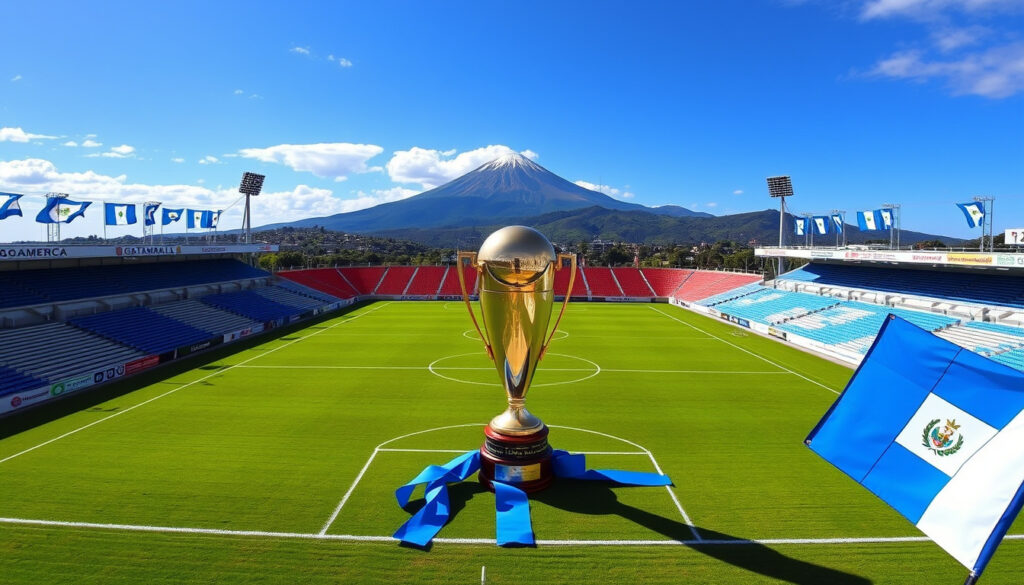
Selección de Fútbol de Guatemala – History, Achievements and Recent Form
The Guatemala national football team, known as La Bicolor or La Azul y Blanco, represents Guatemala in international men’s football competitions. Managed by the Federación Nacional de Fútbol de Guatemala (Fedefut), the team has established itself as a regular contender within the CONCACAF region since its founding in the early twentieth century.
Guatemala’s footballing journey spans over a century, with the national team officially established in 1921 following the formation of the Guatemala Foot Ball Club in 1902. The country was a founding member of CONCACAF in 1961, participating in regional tournaments and World Cup qualifying campaigns throughout its history.
This overview examines Guatemala’s current squad composition, recent competitive results, historical achievements, and the path forward for Los Chapines as they pursue qualification for future international tournaments.
Guatemala National Team: Recent Results and Upcoming Fixtures
Guatemala’s recent competitive history reflects the challenges faced by a nation seeking to establish itself among CONCACAF’s stronger contenders. World Cup qualifying campaigns have presented significant obstacles, with the team navigating through regional tournaments while competing against established powers in the confederation.
Key Insights on Recent Performance
- Guatemala has never qualified for the FIFA World Cup finals, though the team entered qualifying campaigns as early as 1958
- The team maintains consistent participation in CONCACAF competitions, with 11 Gold Cup appearances to date
- Recent managerial approaches have emphasized youth development and tactical modernization
- CONCACAF Nations League participation has provided additional competitive opportunities
- Performance against regional rivals Mexico and the United States remains a benchmark for progress
- Home match results at Estadio Mateo Flores prove crucial for competitive success
Historical Match Snapshot
| Date | Opponent | Score | Competition |
|---|---|---|---|
| September 16, 1921 | Honduras | 9–0 (W) | Independence Centenary Games |
| March 30, 1935 | Honduras | 0–0 (D) | Central American and Caribbean Games |
| December 4, 1943 | El Salvador | 2–2 (D) | CCCF Championship |
| March 1, 1948 | El Salvador | 3–0 (W) | CCCF Championship |
| February 26, 1950 | Colombia | 2–1 (W) | Central American and Caribbean Games |
| February 10, 1957 | Costa Rica | 2–6 (L) | 1958 World Cup Qualifier |
These early results demonstrate Guatemala’s competitive potential during the mid-twentieth century, when regional tournaments served as primary outlets for international football in Central America and the Caribbean.
Historical records indicate that World Cup qualifiers began in 1957, with Guatemala suffering defeats to Costa Rica and the Netherlands Antilles during early qualification attempts. The team has yet to reach the global finals despite numerous campaigns.
Current Squad and Coaching Staff
The Guatemala national team operates under the direction of FEDEFUT, with coaching appointments reflecting the organization’s strategic priorities. Recent managerial tenures have demonstrated instability, with coaches typically serving brief periods before transitions occur.
Coaching Leadership
Recent coaching assignments include Iván Franco Sopegno, who managed the team for four seasons with a reported 28% win rate across 18 matches. Ever Almeida has also served in the managerial role, though specific details regarding the current head coach remain limited in available records.
The selection of coaching staff typically prioritizes candidates with experience in CONCACAF competitions and familiarity with regional football dynamics. Transitions between coaches have occasionally created uncertainty regarding tactical direction and player selection policies.
Guatemala’s football development programs focus on youth integration, with domestic league players forming the core of national team call-ups. The pipeline from youth internationals to the senior squad remains a critical area for national federation attention.
Squad Composition
Detailed current roster information proves difficult to establish from available sources. The squad typically draws from domestic league participants, with the national league serving as the primary talent pool for international selection.
Goalkeepers and defensive players from established clubs receive regular call-ups, while creative midfield positions often feature younger players gaining international experience. For detailed squad information, consulting specialized football databases provides more comprehensive and current rosters.
The captaincy role typically falls to an experienced player with multiple international appearances, providing leadership continuity during competitive tournaments and qualification campaigns.
Ranking Position and Major Achievements
Guatemala’s historical achievements within CONCACAF reflect a period of regional prominence during the 1960s and 1980s, though recent decades have seen the team positioned among the confederation’s middle tier.
CONCACAF Championship Success
Guatemala achieved its most significant triumph by winning the CONCACAF Championship in 1967, a victory that remains the pinnacle of the nation’s footballing accomplishments. Additional runners-up finishes came in 1965 and 1989, demonstrating sustained competitiveness during these periods.
The team’s best result in the CONCACAF Gold Cup, the modern successor to the Championship, is a fourth-place finish achieved in 1996. This performance remains the most recent indication of top-tier regional competitiveness.
Regional Tournament Record
| Tournament | Result | Year(s) |
|---|---|---|
| CONCACAF Championship | Winner | 1967 |
| CONCACAF Championship | Runners-up | 1965, 1989 |
| CCCF Championship | Runners-up | 1943, 1946, 1948 |
| CONCACAF Gold Cup | Fourth Place | 1996 |
The absence of FIFA World Cup qualification despite numerous qualifying campaigns represents a persistent challenge for Guatemalan football. The gap between regional tournament success and global competition qualification highlights the competitive difficulties facing the national team.
Comprehensive FIFA ranking data for 2024-2025 was not available in current research sources. For current ranking information, readers should consult FIFA’s official rankings database directly.
Historical Development and Tournament Participation
Football arrived in Guatemala through British expatriates and coastal trading communities during the late nineteenth century. The formation of Guatemala Foot Ball Club on August 23, 1902, marked the formal beginning of organized football in the country, with teams divided into blue and white sides—a tradition that influenced the national team colors.
Early International Competition
Guatemala played its inaugural international match on September 16, 1921, during the Independence Centenary Games held in Guatemala City. The team defeated Honduras 9–0 in that first encounter before suffering a 6–0 loss to Costa Rica in the tournament final.
Early successes in the CCCF Championship, the predecessor to the CONCACAF Gold Cup, saw Guatemala finish as runners-up three consecutive times in 1943, 1946, and 1948. These results established the nation as a competitive force within Central American football.
The country’s CONCACAF founding membership in 1961 provided additional impetus for competitive development, with the 1967 championship victory representing the culmination of two decades of regional progress.
World Cup Qualification History
Guatemala first entered FIFA World Cup qualifying competition in 1958, with subsequent campaigns demonstrating the challenge of reaching the global finals. The nation’s most recent qualifying efforts have continued this pattern of near-misses and early eliminations.
The path to World Cup qualification requires navigating through CONCACAF’s competitive qualifying format, where teams must surpass regional powers including Mexico, the United States, and Costa Rica. This obstacle course has prevented Guatemala from achieving its long-standing qualification ambition.
For those interested in understanding the broader context of CONCACAF qualification, examining Club América vs Guadalajara provides insight into Mexican football dynamics that indirectly influence regional competition patterns.
Home Venue and Facilities
Estadio Mateo Flores in Guatemala City serves as the primary home venue for national team fixtures. The stadium, with a capacity exceeding 23,000 spectators, provides a home advantage during competitive matches, though results demonstrate that venue factors alone do not guarantee success.
Playing at altitude in Guatemala City has historically provided tactical advantages against visiting teams unaccustomed to elevation. This geographical factor remains relevant for home match strategies.
Timeline of Key Achievements
Guatemala’s footballing history encompasses over a century of development, competition, and regional recognition.
- 1902 – Guatemala Foot Ball Club established, introducing organized football
- 1921 – National team plays first international match against Honduras
- 1943-1948 – Three consecutive CCCF Championship runner-up finishes
- 1961 – Guatemala becomes founding member of CONCACAF
- 1965 – CONCACAF Championship runner-up finish
- 1967 – Wins CONCACAF Championship, the nation’s greatest achievement
- 1989 – Second CONCACAF Championship runner-up finish
- 1996 – Achieves fourth place in CONCACAF Gold Cup
- 2010s-2020s – Continued CONCACAF participation without World Cup qualification
Those seeking broader perspectives on athletic development might find relevant context in Duke Blue Devils Men’s Basketball, which explores collegiate sports development models applicable across different sporting contexts.
What We Know and What Remains Uncertain
Guatemala’s footballing situation presents a mixed picture of established facts alongside areas where current information proves difficult to verify.
Established Facts
- National team founded in 1921 under FEDEFUT administration
- Won CONCACAF Championship in 1967
- Never qualified for FIFA World Cup finals
- Nicknamed La Bicolor with blue and white colors
- Home venue is Estadio Mateo Flores
- Member of CONCACAF since founding in 1961
Areas of Uncertainty
- Current FIFA ranking position
- Active squad roster for 2024-2025
- Current head coach identity and tenure
- Specific World Cup qualifier results
- Upcoming fixture schedule details
- Recent friendly match outcomes
Regional Context and Competitive Standing
Within the CONCACAF region, Guatemala occupies a position that reflects both historical achievement and contemporary challenges. The confederation spans a diverse range of footballing nations, from global powers to developing programs seeking international recognition.
Guatemala’s regional standing depends significantly on performance against immediate rivals including Honduras, El Salvador, and Panama. Head-to-head records against these nations provide practical indicators of competitive positioning within the regional hierarchy.
The footballing landscape in Central America features intense rivalries, with matches against neighboring nations carrying additional significance beyond competitive results. These rivalries shape national team priorities and influence squad selection decisions.
Developing pathways to World Cup qualification requires sustained investment in youth development, coaching education, and competitive exposure. The 2026 World Cup qualification cycle presents a potential opportunity for renewed advancement toward this historic objective.
Comparing Guatemala’s trajectory with regional competitors reveals patterns of advancement and stagnation. Nations successfully achieving World Cup qualification typically demonstrate sustained federation commitment to development programs spanning multiple decades.
Reliable Sources and Further Information
Several authoritative sources provide detailed information on Guatemalan football for those seeking comprehensive coverage.
The official CONCACAF page for Guatemala documents the nation’s participation in regional competitions, including Gold Cup appearances and championship honors.
Historical records and match results are available through comprehensive football databases that track international fixtures across multiple decades.
Additional resources including encyclopedic summaries and specialized football platforms provide current information on squad composition, coaching staff, and upcoming fixtures.
For those interested in football development comparisons, exploring transfer market databases offers insights into player movement and domestic league structures.
Summary
The Guatemala national football team represents a century-old footballing tradition within the CONCACAF region. La Bicolor achieved its greatest honor by winning the CONCACAF Championship in 1967, a victory that established the nation among regional powers during that era.
Contemporary challenges include the persistent failure to qualify for FIFA World Cup finals despite numerous qualifying campaigns. The team continues to participate in regional competitions including the CONCACAF Gold Cup and Nations League, seeking opportunities to demonstrate competitive progress.
Gaps in publicly available information regarding current rankings, squad composition, and recent results highlight the need for consultation with authoritative sources when seeking precise details. The national federation, through FEDEFUT, remains the primary organizational entity responsible for team development and competitive preparation.
Frequently Asked Questions
Has Guatemala ever qualified for the FIFA World Cup?
No. Despite entering World Cup qualifying campaigns since 1958, Guatemala has never reached the global finals. The 2026 qualification cycle presents another opportunity for the nation to achieve this historic objective.
What is Guatemala’s biggest football achievement?
Winning the CONCACAF Championship in 1967 represents Guatemala’s most significant achievement. The team also finished runners-up in 1965 and 1989, with a fourth-place Gold Cup result in 1996.
Where does Guatemala play home matches?
The national team plays home fixtures primarily at Estadio Mateo Flores in Guatemala City, a venue with capacity exceeding 23,000 spectators located at significant altitude.
Who manages the Guatemala national team?
Recent coaching assignments have included Iván Franco Sopegno and Ever Almeida. The current head coach position should be verified through official FEDEFUT announcements or CONCACAF documentation.
What tournaments has Guatemala participated in?
Guatemala has participated in 11 CONCACAF Gold Cup tournaments, multiple CONCACAF Championship competitions, CCCF Championship events, and various World Cup qualifying campaigns.
What is the Guatemala national team’s nickname?
The team is commonly known as La Bicolor, referring to the blue and white kit colors. Alternative references include La Azul y Blanco, using the Spanish color description.
When was the Guatemala national team founded?
The national team was officially established in 1921, following the formation of the Guatemala Foot Ball Club in 1902. The first international match occurred on September 16, 1921.
What colors does the Guatemala national team wear?
The team wears blue and white kits, inspiring the nickname La Bicolor. These colors have been used since the early football clubs that influenced the national team’s formation.
More related posts
 Cast of Dog Man 2025 – Full Voice Cast Guide
 Jason Statham New Movie: Shelter 2026, Mutiny & Wrath of Man
 Bankruptcy Attorney Near Me: Costs, Rules & Pros/Cons
 Toca Madera Las Vegas: Dress Code, Prices & Menu Guide
 Tool Rental Near Me: Compare Screwfix, Toolstation & Home Depot
 Partidos del Mundial de Clubes 2025: Round of 16 Schedule & TV
 Is Ozzy Osbourne Dead – Heavy Metal Icon Passes at 76
 Rocky Horror Picture Show: Cult Classic Guide