How Long to Boil Potatoes for Mashed Potatoes (Perfect)
Anyone who’s ever made mashed potatoes knows the frustration of ending up with a gluey mess or hard lumps. Getting the timing right — and knowing how to check for doneness — is the key to perfect results, whether for a weeknight dinner or a holiday feast.
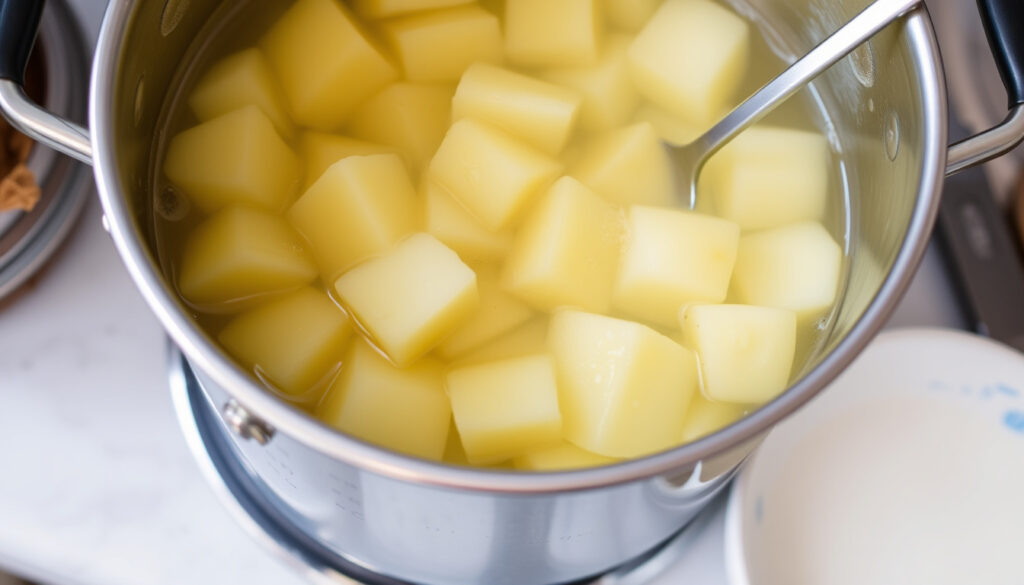
Boil time for cubed potatoes: 15–20 minutes · Boil time for whole potatoes (skin-on): 30–40 minutes · Ideal water level: Potatoes fully submerged (1 inch above) · Test for doneness: Fork or knife slides through easily
Quick snapshot
- Cubed potatoes (1–2 inches) boil in 15–20 minutes (Allrecipes)
- Whole medium potatoes take 20–40 minutes depending on size (Bon Appétit)
- Fork doneness test is the most reliable indicator (KitchPrep)
- Exact boil time varies with altitude — no single universal chart exists (The Living Look)
- Different potato varieties (Yukon Gold, Russet, red) may cook at slightly different rates (The Living Look)
- Altitude adjustment guidelines vary: The Living Look suggests adding 2 minutes per 1,000 feet above 3,000 feet, but this is not universally confirmed (The Living Look) (The Living Look)
- Some sources suggest whole medium potatoes boil in 20-25 minutes (Wellfoodrecipes), while others say 20-40 minutes (Bon Appétit), indicating variation by source (The Living Look)
- Key To My Lime reports potato cubes boil in 10-12 minutes, while most sources say 15-20 minutes (Key To My Lime) (The Living Look)
- After 10 minutes, start testing cubes — they can go from tender to overdone in 5 minutes (Key To My Lime)
- Whole potatoes need a minimum of 20 minutes before the first check (Wellfoodrecipes)
- Drain and dry potatoes over low heat for 2 minutes to remove excess moisture (BBC Good Food)
- Warm milk and butter before adding to prevent cold-dairy shock (BBC Good Food)
The table below distills the key time ranges for different potato preparations, one pattern: smaller pieces cook faster but require more attention to avoid overcooking.
| Preparation | Boil time | Doneness test | Best for |
|---|---|---|---|
| Cubed (1–2 inches, peeled) | 15–20 minutes | Fork slides in with no resistance | Quick mash, weeknight dinners |
| Quartered medium potatoes | 15–20 minutes | Fork meets little resistance | Standard mashed potatoes |
| Whole small potatoes (baby) | 10–12 minutes | Cake tester or knife goes through | Lighter, less starchy mash |
| Whole medium potatoes (skin-on) | 20–25 minutes (Wellfoodrecipes) | Knife slides in, potato soft but not mushy | Earthy flavor, less water absorption |
| Large whole potatoes (skin-on) | 30–40 minutes (Bon Appétit) | Butter knife meets no resistance | Hearty mash, holiday portions |
| 10 pounds of potatoes (cubed) | 20–25 minutes (larger batch) | Test multiple pieces from different areas | Large gatherings, Thanksgiving |
How Long to Boil Potatoes for Mashed Potatoes?
Boil time for cubed vs. whole potatoes
- Cubed potatoes (1–2 inches): 15–20 minutes — this is the most common recommendation across recipe sites (Allrecipes, Spend With Pennies)
- Whole medium potatoes with skin on: 20–40 minutes depending on size — for example, The Pioneer Woman says about 30 minutes for standard medium potatoes
- Baby potatoes: only 10–12 minutes (Bon Appétit)
How to test for doneness
- Insert a fork or knife into the center of a potato piece — it should slide in with no resistance (Wellfoodrecipes)
- If the potato is soft but not falling apart, it’s ready (The Pioneer Woman)
- Stop cooking before the fork easily breaks the pieces apart — that signals overcooking (Key To My Lime)
Home cooks get the best results when they prioritize the fork test over the timer. A few extra minutes in the pot can turn perfect cubes into a starchy mess.
The pattern: The fork test is the ultimate arbiter of doneness, regardless of the cooking method.
Can You Boil Potatoes with Skin On for Mashed Potatoes?
Benefits of skin-on boiling
- Yes, boiling with skin on prevents waterlogging — the skin acts as a barrier, so the potato absorbs less water (Bon Appétit)
- Skin-on boiling adds a mild earthy flavor to the mash
- Leaving the skin on during boiling also makes peeling easier after cooking
When to peel before boiling
- Peel before boiling if you want a perfectly smooth, lump-free mash — no flecks of skin
- For large potatoes, Bon Appétit recommends peeling and cutting into 1-inch cubes for even cooking
- If you’re short on time, peeling after boiling is faster because the skin slips off easily
The trade-off: skin-on boiling yields a slightly coarser texture but guards against waterlogged spuds. For a silky mash, peel first; for more forgiving cook times, keep the skin on.
Can You Over Boil Potatoes for Mashed Potatoes?
Signs of over-boiled potatoes
- Cubes start to break apart and disintegrate after about 25 minutes of boiling
- Whole potatoes may split open and absorb excess water, becoming waterlogged
- The mash turns gluey or pasty because starch granules have burst and released too much starch
What happens if you over boil
- Over-boiled potatoes produce a gluey, unappetizing mash that is difficult to fix (Wellfoodrecipes)
- Excess water in the cells creates a thin, runny texture when you try to mash
- Once over-boiled, you can try drying them further in the pot over low heat, but the texture is already compromised
The window between perfectly tender and over-boiled is narrow — about 3–5 minutes for cubes. Set a timer and start testing at the 12-minute mark if you’re using small cubes.
What this means: Over-boiling is the fastest route to a ruined mash.
What Is a Common Mistake When Making Mashed Potatoes?
Undercooking potatoes
- Undercooked potatoes leave hard lumps in the mash — no amount of mashing will fix them
- Always test the largest piece in the pot; if it’s not tender, keep boiling
Adding cold dairy to hot mash
- Cold milk or cream causes the starch to seize, creating a gummy, uneven texture (BBC Good Food)
- Warm the dairy (milk, butter, cream) before adding — either in a saucepan or microwave
Over-mixing
- Using an electric mixer or food processor overworks the starch, turning the mash into a gluey paste (Spend With Pennies)
- Use a potato masher or ricer for a light, fluffy texture
Three simple mistakes — undercooking, cold dairy, over-mixing — account for most failed mashed potatoes. Fixing even one of them dramatically improves the result.
The catch: These mistakes are easily avoidable with attention to detail.
How to Make the Perfect Mashed Potato?
Step-by-step method
- Choose and cut potatoes — peel and cut large potatoes into 1-inch cubes (or leave small/medium whole). Place in a large pot.
- Cover with cold water — add enough water to submerge potatoes by 1 inch. Add 1 tablespoon of kosher salt per quart of water (Bon Appétit).
- Bring to a boil — heat over high until boiling, then reduce to medium to maintain a gentle boil (Key To My Lime).
- Boil until fork-tender — cubes: 15–20 minutes; whole: 20–40 minutes. Test with a fork or knife.
- Drain and dry — drain in a colander, then return potatoes to the hot pot. Set over low heat for 2 minutes, shaking occasionally, to evaporate excess moisture (BBC Good Food).
- Add warm butter first — cut into pieces and let it melt over the hot potatoes, then pour in warm milk or cream (Spend With Pennies).
- Mash gently — use a potato masher or ricer. Avoid over-mixing. Season with salt and pepper to taste.
Drying potatoes after boiling
- This step is crucial: the residual heat drives off surface water that would otherwise water down your mash (BBC Good Food)
- Keep the pot uncovered over low heat for about 2 minutes, shaking occasionally
Warming dairy before adding
- Heat milk, cream, or half-and-half in a small saucepan until warm (not boiling)
- Melt butter in the same dairy or separately — either way, it should be warm when added
The implication: Taking the extra 2 minutes to dry the potatoes and warm the dairy is the difference between a memorable mash and a forgettable side dish.
Do You Add Milk or Butter First to Mashed Potatoes?
Order of ingredient addition
- Add butter first, then warm milk — this is the standard recommendation across recipe sites (Spend With Pennies)
- Why: butter coats the starch granules, preventing them from absorbing too much liquid and becoming gluey
Why the order matters
- If you add cold milk first, the starch can seize and create a gummy texture
- Warm butter melts into the potato, emulsifying the fat and creating a creamy mouthfeel
- Milk added after the butter is already incorporated disperses more evenly
The pattern: Butter first, then milk. This simple sequence is backed by both food science and generations of home cooks.
Clarity check
Confirmed facts
- Cubed potatoes boil in 15–20 minutes (Allrecipes)
- Whole medium potatoes take 20–40 minutes (Bon Appétit)
- Boiling with skin on prevents waterlogging
- Over-boiling leads to gluey mash (Wellfoodrecipes)
- Fork test is the most reliable doneness check (KitchPrep)
What’s unclear
- Exact boil time at high altitude is not systematically documented — rule of thumb: add 2 minutes per 1,000 feet above 3,000 feet (The Living Look)
- Different potato varieties (Yukon Gold vs. Russet) may require slightly different timing
- Altitude adjustment guidelines are not consistently documented across recipe sites (The Living Look)
“Boil potatoes for about 15 minutes or until tender, then set over very low heat to dry.”
— BBC Good Food recipe
“Cook for 15 to 20 minutes, or until you can easily poke through with a fork.”
— Simply Recipes
For home cooks aiming to avoid the dreaded gluey mash, the solution is straightforward: cut uniformly, boil until fork-tender, dry thoroughly, and add warm dairy in the right order. For the holiday cook making 10 pounds of potatoes, invest in a potato ricer and test a few pieces from different layers of the pot. The choice is clear: a few minutes of careful technique transforms a basic side into a dish guests remember.
essycooks.com, policyline.uk, ourgabledhome.com, spice.alibaba.com, thepioneerwoman.com, spendwithpennies.com
Frequently asked questions
Can you boil potatoes for mashed potatoes too long?
Yes, boiling too long causes potatoes to absorb excess water and break down, resulting in a gluey, waterlogged mash. Start testing cubes at 12 minutes and whole potatoes at 20 minutes.
Should you boil potatoes covered or uncovered for mashed potatoes?
Boil uncovered or partially covered to allow steam to escape and prevent the water from boiling over. A full lid can cause the water to foam up and spill.
How long to boil 10 pounds of potatoes for mashed potatoes?
For 10 pounds of cubed potatoes, boil for 20–25 minutes. The larger volume may require a few extra minutes — test multiple pieces from different areas of the pot.
How do you dry potatoes after boiling for mashed potatoes?
Drain the potatoes, return them to the pot, and set over low heat for 2 minutes, shaking occasionally. This evaporates surface moisture and prevents watery mash.
Why are my mashed potatoes gluey?
Gluey mash usually results from over-boiling, over-mixing (using an electric mixer), or adding cold dairy. Use a potato masher, warm your milk and butter, and stop mixing as soon as the ingredients are combined.
How long to boil Yukon Gold potatoes for mashed potatoes?
Yukon Golds behave similarly to standard potatoes: cube them and boil for 15–20 minutes, or leave whole small ones for 20–25 minutes. Test with a fork.
How long to boil potatoes for mashed potatoes at high altitude?
At 3,000–5,000 feet, add about 2 minutes; at 5,001–7,000 feet, add 4 minutes; above 7,000 feet, add 5 minutes or more (The Living Look). Always use the fork test as the final judge.
How long to boil potatoes for mashed potatoes cubed?
Potatoes cut into 1–2 inch cubes typically take 15–20 minutes. Start checking at 12 minutes if you’re using smaller cubes.
For more cooking and meal prep tips, check out our Vegetarian Protein-Packed Meals Guide and Best Calorie Counter App 2025.
More related posts
 Is Costco Open on Memorial Day 2025? Hours & Closures
 XRP Price Prediction 2026 & Millionaire Calculator
 Makena White Cause of Death: Heart Defect, Tachycardia
 Sarah from Outer Banks: Madelyn Cline Age, Facts & Real Life
 Under the Oak Tree: Novel Ending, Manhwa Status & Readers Guide
 How to Use Microsoft Teams: A Beginner’s Guide
 Utah Jazz vs Timberwolves Match Player Stats & Analysis
 Dishwasher Repair Near Me: Repair or Replace? (2025 Cost Guide)