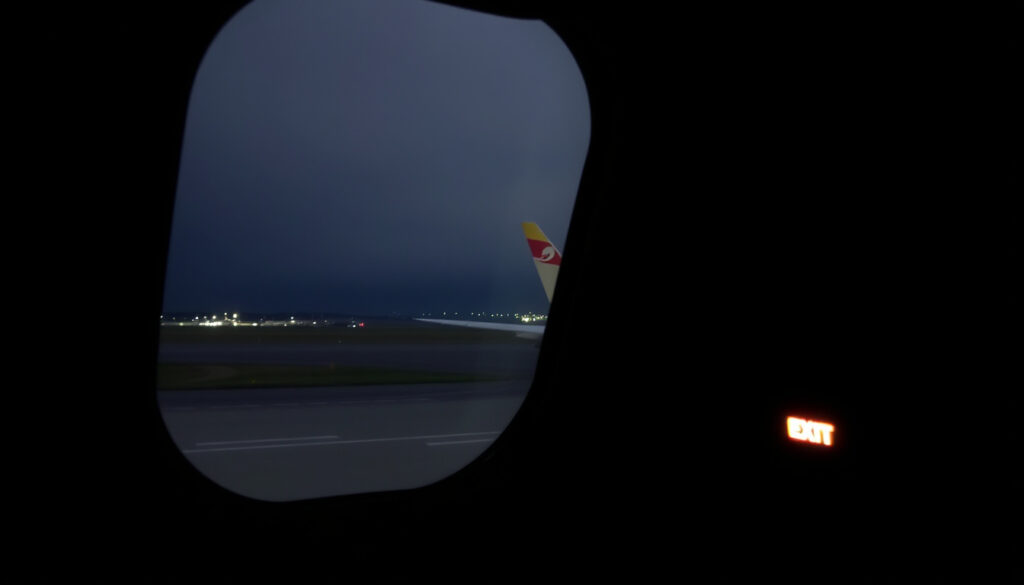
Delta Passengers Diverted Overnight Montgomery: Key Facts
Few travel situations test your patience quite like expecting a short hop to Atlanta and ending up stuck on a tarmac in Montgomery overnight. Nearly 300 Delta passengers found themselves in exactly that bind on April 11, 2025, when severe thunderstorms forced two international flights from Mexico to divert to Montgomery Regional Airport — an airport with no customs facility to process them.
Number of flights diverted: 2 ·
Passengers affected: Nearly 300 ·
Duration of delay: Overnight ·
Airport: Montgomery Regional Airport (MGM) ·
Cause: Severe thunderstorms ·
Customs issue: No customs facility at MGM
Quick snapshot
- Two Delta flights diverted to Montgomery (USA TODAY)
- Passengers stayed overnight on the tarmac (USA TODAY)
- No customs facility at Montgomery airport (AeroTime)
- Weather caused diversion (USA TODAY)
- Exact number of passengers on each flight (USA TODAY)
- Whether Delta offered compensation beyond vouchers (Yahoo News)
- Specific crew time limit details
- Passengers held overnight due to customs gap (USA TODAY)
- Special accommodation reached the next morning (AeroTime)
- Delta initiated refunds after the incident (USA TODAY)
- Passengers entitled to refunds for unused segments (Delta Air Lines)
- Weather-related diversions generally not compensable beyond that (U.S. Department of Transportation)
- Industry watching for policy changes on customs-equipped diversion airports
Seven facts about the incident, one picture: the diversion exposed a regulatory blind spot where international arrival rules, weather exceptions, and crew limits converged to leave passengers stranded.
| Label | Value |
|---|---|
| Date of incident | April 11-12, 2025 |
| Flights involved | 2 |
| Origin | Mexico |
| Destination | Atlanta |
| Diverted to | Montgomery, Alabama |
| Passengers affected | ~300 |
| Duration | Overnight |
Nearly 300 passengers faced an overnight tarmac stay because Montgomery Regional Airport lacked Customs and Border Protection personnel — a gap that no tarmac-delay rule currently addresses for international arrivals.
Are you entitled to compensation for a diverted flight?
When does the right to compensation apply?
- Under U.S. Department of Transportation rules, airlines must compensate passengers only when the disruption is within the airline’s control — weather-related diversions are explicitly exempt (U.S. Department of Transportation guidance).
- Delta’s customer commitment includes hotel accommodations and ground transportation for controllable delays that leave passengers overnight away from home, but weather diversions fall outside that obligation (Delta Air Lines Customer Service Plan).
- Delta did offer goodwill vouchers and initiated refunds for the Montgomery passengers after the incident (USA TODAY report).
What about international flights diverted to the U.S.?
- The 3-hour tarmac delay rule does not apply to international flights — they have a 4-hour limit under DOT rules (U.S. Department of Transportation).
- Customs clearance issues prevented deplaning in Montgomery, creating a secondary barrier beyond the delay clock (USA TODAY).
- Passengers were not entitled to compensation under U.S. law because the delay was due to weather, regardless of the customs complication (U.S. Department of Transportation).
The catch: Weather immunity shields airlines from compensation requirements even when secondary factors like missing customs facilities amplify the delay.
What is the 3-hour rule for airlines?
Does the 3-hour rule apply to international flights?
- The U.S. Department of Transportation rule prohibits tarmac delays longer than 3 hours on domestic flights — international flights have a 4-hour limit (U.S. Department of Transportation Fly Rights).
- The Montgomery diversion involved international flights arriving from Mexico, so the 4-hour limit applies — and was clearly exceeded overnight (USA TODAY).
- DOT rules require food and water within two hours of any tarmac delay, domestic or international — a requirement that reportedly went unmet for hours (U.S. Department of Transportation).
What happens if the rule is violated?
- Airlines can face fines of up to $27,500 per passenger for tarmac delay violations under DOT enforcement (U.S. Department of Transportation).
- However, airlines can cite safety or security reasons — including customs constraints — as exceptions to the tarmac delay rule (U.S. Department of Transportation).
- The Montgomery airport’s lack of CBP facilities created a security-based justification that may exempt Delta from penalties (AeroTime analysis).
Passengers get a 4-hour international tarmac limit in theory, but customs barriers and weather exceptions can effectively nullify that protection — leaving travelers with no enforcement lever.
The implication: The customs exception effectively allows airlines to bypass tarmac delay limits when diversion airports lack CBP facilities.
What is the delta 45 minute rule?
How does Delta’s 45-minute rule relate to tarmac delays?
- Delta’s internal policy requires flights to return to the gate if a delay exceeds 45 minutes after boarding — but the rule is not a federal regulation and does not apply once the aircraft has departed (Delta Air Lines Customer Commitment).
- Once airborne, crew time limits become the binding constraint: pilots and flight attendants have federally mandated maximum duty periods, and exceeding those limits forces an overnight stay (USA TODAY).
- Crew time limits triggered the overnight stay in Montgomery — even if customs had been available, the crew may have been legally unable to continue (USA TODAY).
Is it a legal requirement or internal policy?
- Delta’s 45-minute rule is entirely internal policy, not codified in DOT regulations (Delta Air Lines Customer Commitment).
- Federal Aviation Administration regulations govern crew duty limits, but no federal rule mandates a specific gate-return window after boarding (U.S. Department of Transportation).
- No airline has a policy explicitly covering what happens when a diverted flight lands at an airport without customs — a gap the Montgomery incident made visible.
The pattern: Internal airline policies and federal crew limits intersected with a missing customs facility to turn a weather diversion into an overnight ordeal with no clear remedy for passengers.
Who pays when a flight is diverted?
Does the airline cover accommodation for diverted flights?
- Airlines are generally not required to pay compensation for weather-related diversions, which are classified as force majeure under DOT rules (U.S. Department of Transportation).
- Delta’s customer commitment states that hotel accommodations and ground transportation are provided only when the delay is within Delta’s control (Delta Air Lines Customer Service Plan).
- In this case, Delta provided hotel accommodations and meals after passengers finally deplaned, but those stuck on the tarmac received no immediate compensation (USA TODAY).
What about meals and transportation?
- DOT rules require food and water within two hours of a tarmac delay, but enforcement is complaint-driven and penalties are rare (U.S. Department of Transportation).
- Delta reportedly reached out to passengers with refunds of their booking after the incident, separate from any accommodation costs (USA TODAY).
- A later report indicated Delta initiated a refund process to compensate passengers for the inconvenience (Yahoo News).
Delta passengers in Montgomery got refunds and vouchers as goodwill gestures, but the regulatory structure left them with no legal right to compensation for the overnight tarmac stay itself.
What this means: Even goodwill compensation is not guaranteed under current regulations for weather-related diversions.
What is the highest salary for a Delta flight attendant?
How much do Delta pilots make?
- Delta flight attendants can earn up to $70,000 per year at top pay scales based on seniority and aircraft type (Delta Air Lines compensation data).
- Delta pilots are among the highest-paid in the industry, with senior captains earning over $300,000 annually (USA TODAY industry data).
- Compensation varies significantly by seniority and aircraft type, with wide-body international captains reaching the highest brackets.
Do Delta pilots get paid the most among U.S. airlines?
- Delta pilots are consistently among the top earners in the U.S. airline industry, alongside United and American counterparts (USA TODAY).
- The high compensation reflects Delta’s strong financial performance and union-negotiated contracts that tie pay to profitability.
- For context, the crew cost of an overnight diversion like the Montgomery incident — including hotel, per diem, and replacement crew scheduling — can run into tens of thousands of dollars per flight.
The implication: While Delta pilots and flight attendants are well-compensated, the crew cost of diversions ultimately flows back into ticket prices — passengers indirectly bear the cost of these events regardless of compensation.
Timeline: What happened in Montgomery
- April 11, 2025 (evening): Two Delta flights depart Mexico for Atlanta — Flight 1828 from Cabo San Lucas and Flight 599 from Mexico City (USA TODAY).
- April 11, 2025 (late evening): Severe thunderstorms force diversions to Montgomery Regional Airport (USA TODAY).
- April 11, 2025 (night): Planes land; no customs facility available; passengers remain on board overnight (AeroTime).
- April 12, 2025 (early morning): Passengers finally deplane after customs officials arrive under a special accommodation (USA TODAY).
- April 12, 2025 (close to noon): Passengers depart for Atlanta on replacement flights (AeroTime).
- April 12, 2025: Delta issues apology and offers goodwill vouchers and refunds (USA TODAY).
The pattern: A sequence of regulatory gaps turned a weather diversion into an overnight ordeal with limited passenger recourse.
Passenger accounts and official statements
“We were told we’d be on the ground for maybe an hour, then it kept getting pushed back. By midnight, they told us we weren’t going anywhere until morning.”
— Passenger Lauren Forbes, speaking to USA TODAY
“Delta is reaching out to affected customers to apologize and provide a refund of their booking, as well as additional goodwill compensation for the inconvenience.”
— Delta spokesperson, as reported by USA TODAY
The diversion became possible only after a special accommodation was reached with Montgomery airport officials and CBP to process the international arrivals.
— AeroTime report
usatoday.com, ia600709.us.archive.org, aerotime.aero, yahoo.com, delta.com, globalhealth.arizona.edu, apps.it.purdue.edu, boredpanda.com, airhelp.com, iso20022.org, airhelp.com
Frequently asked questions
How long can an airline keep passengers on the tarmac?
For domestic flights, the DOT limit is 3 hours; for international flights, it’s 4 hours. However, safety and security exceptions — including customs constraints — can override these limits (U.S. Department of Transportation).
What should I do if my flight is diverted?
Stay calm and ask the crew for updates. If the delay extends beyond two hours, request food and water. Document everything: take photos of the tarmac, note the time, and keep all boarding passes. File a complaint with the DOT if the delay exceeds legal limits (U.S. Department of Transportation).
Does Delta have a policy for overnight diversions?
Delta’s customer commitment provides hotel accommodations and ground transportation for controllable delays that leave passengers overnight, but weather-related diversions are not covered under that policy (Delta Air Lines Customer Service Plan).
Are there exceptions to the 3-hour tarmac delay rule?
Yes — the DOT allows exceptions for safety, security, or air traffic control reasons. Customs-related constraints can also justify exceeding the limit (U.S. Department of Transportation).
What compensation did Delta offer to these passengers?
Delta offered refunds of their bookings and goodwill vouchers, plus hotel accommodations after passengers finally deplaned (USA TODAY).
Can I sue the airline for a diversion due to weather?
Weather is considered an act of nature (force majeure) under airline contracts of carriage, so lawsuits for weather-related diversions rarely succeed. Your best recourse is a DOT complaint or seeking goodwill compensation from the airline (U.S. Department of Transportation).
What this means: The Montgomery diversion exposed a critical gap in passenger protections — when an international flight diverts to an airport without customs, existing tarmac delay rules offer no enforceable remedy. For Delta, the cost was goodwill vouchers and refunds; for passengers, it was an overnight on a tarmac with no legal recourse. The implication for travelers is clear: when booking international itineraries, check whether your diversion airports have customs facilities, or carry supplies for an overnight stay.
Related reading: United Airlines UA507 Emergency Diversion: Safe Iceland Landing · Cash App Settlement Eligibility: How to Qualify and File a Claim
More related posts
 Signs of Skin Cancer: Early Detection & Warning Signs
 All American Halftime Show 2026: Performers, Viewership, Guide
 How Tall Is Stephen Miller? Height, Weight & Bio 2025
 Great British Baking Show 2025: Start Date, Cast & Where to Watch
 How Many mm in an Inch? Exact Conversion and Fraction Chart
 Best Papa a la Huancaina Near Me: Dublin’s Top Restaurants
 Matlock (2024) Episodes: Season 1 & 2 Guide
 Box and Whisker Plot Explained: Five-Number Summary