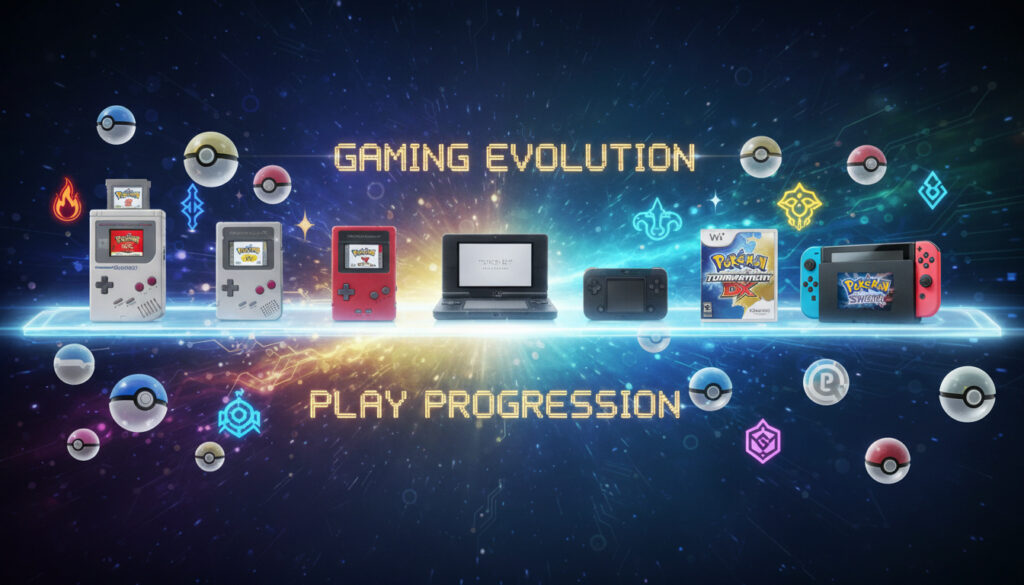
Pokemon Games in Order – Release Timeline and Play Guide
The mainline Pokémon series spans nine generations of core role-playing adventures, beginning with Pokémon Red and Green in February 1996 and extending through the anticipated 2027 release of Pokémon Winds and Waves. Over nearly three decades, Game Freak and Nintendo have released more than thirty distinct titles across evolving hardware platforms, creating a complex catalog that includes original entries, enhanced versions, and modern remakes.
Understanding the optimal sequence for experiencing these games requires navigating between historical release dates, narrative chronology, and hardware accessibility. While each generation presents a self-contained story within its specific region, the series introduces evolving mechanics and occasional cross-generational references that reward players who approach the titles systematically.
What Order Should You Play Pokémon Games In?
- Release order preserves the intended mechanical evolution and difficulty curve designed by Game Freak across decades.
- Chronological narrative order exists only loosely, as each generation’s story remains largely independent within its regional setting.
- Remakes such as FireRed and Brilliant Diamond modernize older entries but remain optional for players seeking the original experience.
- Platform constraints often dictate practical choices, as earlier generations require obsolete hardware or emulation.
- Legends titles operate within alternate timelines that explore historical periods without directly connecting to mainline continuity.
- Beginner accessibility favors recent Nintendo Switch entries that streamline mechanics while maintaining core gameplay loops.
- Completionist paths require navigating both original releases and enhanced third versions like Emerald or Platinum.
| Generation | Core Games | Release Year | Platform |
|---|---|---|---|
| I | Red, Blue, Yellow | 1996–1998 | Game Boy |
| II | Gold, Silver, Crystal | 1999–2001 | Game Boy Color |
| III | Ruby, Sapphire, FireRed, LeafGreen, Emerald | 2002–2005 | Game Boy Advance |
| IV | Diamond, Pearl, Platinum, HeartGold, SoulSilver | 2006–2009 | Nintendo DS |
| V | Black, White, Black 2, White 2 | 2010–2012 | Nintendo DS |
| VI | X, Y, Omega Ruby, Alpha Sapphire | 2013–2014 | Nintendo 3DS |
| VII | Sun, Moon, Ultra Sun, Ultra Moon, Let’s Go | 2016–2018 | Nintendo 3DS, Switch |
| VIII | Sword, Shield, Brilliant Diamond, Shining Pearl, Legends: Arceus | 2019–2022 | Nintendo Switch |
| IX | Scarlet, Violet, Legends: Z-A, Winds and Waves | 2022–2027 | Nintendo Switch |
Pokémon Games in Release Order
Generation I Through III: The Foundation
The series originated with Pokémon Red and Green launching in Japan on , followed by the international Blue version and the enhanced Yellow special edition. Generation II expanded the world with Gold and Silver in November 1999, introducing the internal clock and breeding mechanics. Crystal followed in December 2000 as the first title with animated Pokémon sprites. According to Nintendo Fandom documentation, Generation III marked the shift to Game Boy Advance with Ruby and Sapphire in 2002, establishing the modern battle system while remaking the original Kanto region in FireRed and LeafGreen (2004).
Players prioritizing modern controls should select FireRed and LeafGreen over the original Generation I titles. These remakes incorporate the Physical/Special split and quality-of-life improvements introduced in Generation III.
Generation IV and V: The DS Expansion
The Nintendo DS era began with Diamond and Pearl in September 2006, utilizing the touchscreen for inventory management while maintaining the traditional top-screen battle view. Platinum refined this engine in 2008, followed by dual-screen remakes HeartGold and SoulSilver in 2009. Generation V introduced direct sequels rather than enhanced re-releases, with Black 2 and White 2 (2012) continuing the narrative two years after the original Black and White titles.
Generation VI and VII: The 3D Transition
X and Y (2013) debuted fully rendered 3D models, abandoning the sprite-based aesthetic of previous generations. Omega Ruby and Alpha Sapphire (2014) rebuilt Generation III with these visual standards. The series then split between traditional entries (Sun, Moon, 2016; Ultra Sun, Ultra Moon, 2017) and accessible remakes (Let’s Go, Pikachu! and Eevee!, 2018) designed for newcomers familiar with mobile game mechanics.
Generation VIII and IX: The Switch Era
Nintendo Switch hardware enabled open-world exploration in Sword and Shield (2019), though traditional remakes Brilliant Diamond and Shining Pearl (2021) maintained classic grid-based movement. Legends: Arceus (2022) pioneered action-oriented catching mechanics, influencing Scarlet and Violet‘s seamless open world later that year. Upcoming releases include Legends: Z-A () and Winds and Waves (2027).
Pokémon Games in Chronological Story Order
The Main Timeline Structure
The Pokémon narrative does not follow a strict chronological sequence across generations. Each entry presents a self-contained adventure within its specific region, with minimal direct story continuity between different generations. According to Wikipedia’s series documentation, the games generally advance technology and world-building incrementally, but the protagonist of each generation is a distinct character with no narrative obligation to previous heroes.
Remakes and Narrative Placement
Remakes such as HeartGold or Omega Ruby retell the same stories as their originals, meaning they occupy identical narrative positions despite releasing years later. Players selecting between original and remake versions face identical plot beats, though remakes occasionally incorporate references to future generations that did not exist during the original releases.
Pokémon Legends: Arceus and Legends: Z-A explore historical or alternate-timeline settings that exist outside the main generational continuity. These titles prioritize gameplay experimentation over narrative connection to core RPG entries.
Sequential Sequels
Only Generation V broke the standalone tradition by releasing direct narrative sequels. Black 2 and White 2 occur two years after their predecessors, featuring returning characters and evolved region states. This remains the sole instance of mandatory sequential storytelling within the mainline series.
How Many Mainline Pokémon Games Are There?
The mainline catalog contains thirty-plus distinct retail releases when accounting for paired versions, third versions, and remakes. However, the core narrative experience requires approximately nine primary entries—one representing generation—rather than completion of every variant. Serebii.net’s main series database documents these releases across handheld platforms from the original Game Boy through the Nintendo Switch.
Counting methodology varies among archivists. Some databases classify paired releases (Red and Blue) as single entries, while others enumerate them separately. Enhanced third versions (Yellow, Crystal, Emerald, Platinum) add further complexity, as do the dual-region remakes and the Ultra variants of Generation VII.
Nintendo has not maintained backward compatibility for Game Boy and Game Boy Color cartridges on current hardware, making physical copies of Generations I and II unplayable on Switch without subscription-based emulation services.
Complete Release Timeline by Generation
- Generation I (1996–1998): Red, Green, Blue, and Yellow established the foundational 151 Pokémon on Game Boy hardware.
- Generation II (1999–2001): Gold, Silver, and Crystal expanded to 251 species with real-time clock functionality.
- Generation III (2002–2005): Ruby, Sapphire, FireRed, LeafGreen, and Emerald rebuilt the engine for Game Boy Advance.
- Generation IV (2006–2009): Diamond, Pearl, Platinum, HeartGold, and SoulSilver utilized Nintendo DS touchscreens.
- Generation V (2010–2012): Black, White, Black 2, and White 2 refined 2D sprite work while introducing direct sequels.
- Generation VI (2013–2014): X, Y, Omega Ruby, and Alpha Sapphire debuted fully 3D rendered Pokémon models.
- Generation VII (2016–2018): Sun, Moon, Ultra Sun, Ultra Moon, and Let’s Go transitioned between 3DS and Switch.
- Generation VIII (2019–2022): Sword, Shield, Brilliant Diamond, Shining Pearl, Legends: Arceus, and Scarlet, Violet expanded Switch library.
- Generation IX (2025–2027): Legends: Z-A and Winds and Waves represent forthcoming releases continuing the Switch lineage.
What Is Known vs. Uncertain About Play Order?
| Established Information | Information That Remains Unclear |
|---|---|
| Release dates and platform compatibility are fixed and documented by Bulbapedia and Nintendo archives. | The “best” entry point remains subjective, dependent on player tolerance for retro mechanics versus modern accessibility. |
| Remake status is verified; enhanced versions contain definitive post-game content. | Exact canonical placement of Legends titles within broader timeline theory remains debated due to time-travel narrative elements. |
| 18+ core releases constitute the mainline series across nine generations. | Continuity between distant generations exists primarily through Easter eggs rather than plot necessity, creating ambiguity about “required” viewing order. |
Why Does Play Order Matter for Pokémon?
Hardware evolution fundamentally alters gameplay experience across generations. Early titles restricted movement to four-directional grid tiles with limited inventory management, while contemporary releases feature seamless open worlds with real-time action mechanics. Players beginning with Scarlet or Violet may find earlier entries mechanically restrictive if approached retroactively, while those starting with Red or Blue witness the gradual refinement of quality-of-life features such as running shoes, reusable TMs, and experience-share devices. Nintendo’s official Pokémon portal maintains active support for recent generations while legacy hardware requires secondary market acquisition.
The Sabrina Carpenter Barry Keoghan relationship timeline illustrates how chronological tracking applies across entertainment media, though Pokémon specifically offers modular storytelling that resists rigid sequencing. Each generation assumes no prior knowledge, making the series uniquely accessible regardless of entry point.
What Do Official Sources Say About Canon?
The mainline Pokémon series consists of core role-playing games released across multiple generations of Nintendo handhelds, beginning with Pokémon Red and Blue in 1996.
Serebii.net Database
Generation IX includes Pokémon Legends: Z-A releasing October 16, 2025, and Pokémon Winds and Waves scheduled for 2027.
Nintendo Fandom Wiki
The latest release is Pokémon Legends: Z-A (October 16, 2025), with the upcoming Pokémon Winds and Waves scheduled for 2027.
Final Recommendations for Playing Pokémon in Order
New players should prioritize platform availability and mechanical comfort over strict adherence to either release or narrative chronology. The Nintendo Switch offers the most accessible entry points through Let’s Go for simplified mechanics, Brilliant Diamond for classic grid-based exploration, or Scarlet and Violet for contemporary open-world design. Completionists seeking the full mechanical evolution should proceed generationally from I through IX, utilizing remakes where original hardware proves unavailable. For additional context on tracking sequential media releases, consult the Sabrina Carpenter Barry Keoghan relationship status and timeline.
Frequently Asked Questions
How many Pokémon games are there in total?
The mainline series includes over thirty distinct releases across nine generations, counting paired versions, enhanced third versions, and remakes separately.
Do I need to play all generations to understand the story?
No. Each generation presents a self-contained narrative within its specific region, requiring no prior knowledge of previous titles.
Are remakes necessary if I played the originals?
Remakes retell identical stories with updated mechanics. They offer quality-of-life improvements but do not advance the narrative beyond the original releases.
What hardware do I need to play the earliest games?
Original Game Boy and Game Boy Color cartridges require obsolete hardware or Nintendo Switch Online subscription emulation for Generations I and II.
Is Pokémon Legends: Arceus connected to the main story?
Legends titles occupy alternate timelines exploring historical settings. They do not connect directly to the main generational continuity.
Which generation offers the longest gameplay experience?
Generation V’s direct sequels (Black 2 and White 2) combined with their predecessors provide the most continuous narrative content.
Can I skip generations and still follow the story?
Yes. Skipping generations causes no narrative confusion, as each entry introduces a new protagonist and region with minimal reference to previous games.
More related posts
 Coffee Places Near Me: Irish Coffee Spots, Cafés & Tips
 Kevin Porter Jr Stats: Bucks Highs, Career & Injury
 90 Days From Today: Exact Date and How to Calculate
 One Big Beautiful Bill Act: Trump Tax Cuts Explained
 Free AI Art Generator – Top Unlimited Picks 2025
 Culver’s Menu with Prices 2024: Full List & Updates
 What Does It Mean – Definitions, Etymology and Usage Guide