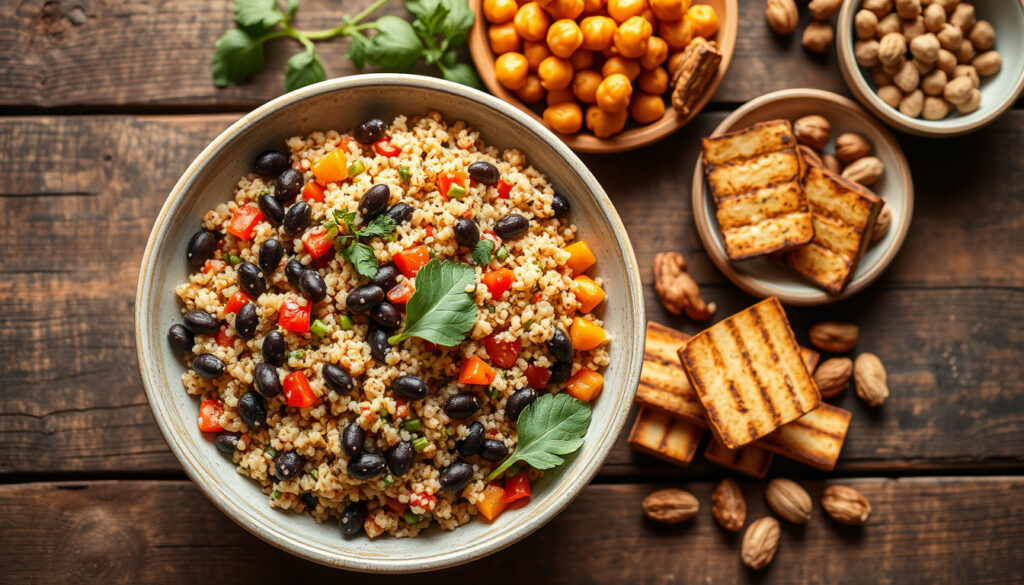
Vegetarian Protein-Packed Meals: 20g+ Recipes
Anyone who has tried to pack more protein into a meatless meal knows the struggle: you want something satisfying, but you don’t want it to taste like cardboard. The good news is that a growing collection of recipes now delivers 20 grams of protein or more per serving using ingredients you can find at any grocery store — and with the right methods, building those meals is easier than you think.
Minimum protein per serving: 20g (Women’s Health magazine) ·
Top recipes count: 60+ (Urban Farmie recipe blog) ·
Tofu block (14 oz): 28g protein (Urban Farmie recipe blog) ·
Black beans (1 can): 21g protein (Urban Farmie recipe blog)
Quick snapshot
- Uses lentils, chickpeas, paneer, tofu (Urban Farmie recipe blog)
- Rich in spices and flavor (Urban Farmie recipe blog)
- Often 15–25g protein per serving (Urban Farmie recipe blog)
- Low calorie, high satiety (Nourish Move Love wellness blog)
- Includes leafy greens and legumes (Nourish Move Love wellness blog)
- Portion controlled recipes (Nourish Move Love wellness blog)
- Complete protein combinations (grains + legumes) (Women’s Health magazine)
- Higher protein per serving (25–30g) (Women’s Health magazine)
- Includes soy, quinoa, eggs (Women’s Health magazine)
- Under 30 minutes prep (Tiffy Cooks food blog)
- Minimal ingredients (Tiffy Cooks food blog)
- Uses canned or pre-cooked items (Tiffy Cooks food blog)
The table below compiles verified data from leading nutrition and recipe sources.
| Fact | Value | Source |
|---|---|---|
| Protein per serving target | 20–30g | Women’s Health (leading women’s lifestyle magazine) |
| Top vegetarian protein sources | Lentils, chickpeas, tofu, paneer, eggs, Greek yogurt | Urban Farmie (recipe blog) |
| Number of recipes in top collections | 40–60+ | Urban Farmie |
| Lentils (1 cup cooked) | ~18g protein | Nourish Move Love (wellness blog) |
| Tofu (per 100g) | 8–10g protein | Women’s Health |
| Paneer (per 100g) | ~18g protein | Urban Farmie |
| Egg (1 large) | 6g protein | Women’s Health |
| Black beans (1 can) | 21g protein | Urban Farmie |
What are the best high protein vegetarian meals Indian?
Key Indian ingredients high in protein
- Dal (lentils) — about 12–18g protein per serving (Nourish Move Love wellness blog)
- Chickpeas — staple in chana masala, ~15g per cup (Urban Farmie recipe blog)
- Paneer — 18g per 100g (Urban Farmie recipe blog)
- Tofu — 8–10g per 100g, common in Indo-Chinese dishes (Women’s Health magazine)
Sample Indian high protein vegetarian recipes
- Chana masala — chickpea curry, ~20g protein per bowl (Urban Farmie recipe blog)
- Dal tadka — tempered lentil soup, ~18g protein (Nourish Move Love wellness blog)
- Paneer bhurji — scrambled paneer, ~18g protein (Urban Farmie recipe blog)
- Tofu tikka masala — grilled tofu in spiced gravy, ~20g protein (Women’s Health magazine)
Indian cuisine already has a built-in high-protein advantage: lentils, chickpeas, and paneer appear in countless dishes. The catch is portion size and added oil — a generous dal with a side of rice can easily hit 20g protein, but only if you don’t drown it in cream or ghee.
The pattern is clear: traditional Indian cooking already centers these protein sources, so the main adjustment is managing fat and portion size rather than hunting for obscure ingredients.
Which high protein vegetarian meals are best for weight loss?
Low-calorie high protein vegetarian options
- Tofu stir-fry with vegetables — under 300 calories, ~20g protein (Women’s Health magazine)
- Lentil soup — ~200 calories, 12–18g protein (Nourish Move Love wellness blog)
- Greek yogurt bowl with berries — ~150 calories, 15g protein (Women’s Health magazine)
Portion control and protein density
- Leafy greens, lentils, and tofu are naturally low-calorie and high-protein (Nourish Move Love wellness blog)
- Protein increases satiety, reducing overall calorie intake (Women’s Health magazine)
Meals with 20–30g protein and under 400 calories are the sweet spot for weight loss. The implication: skip the heavy cream sauces and focus on spice-based, broth-based, or stir-fry methods. A simple tofu scramble with spinach checks all boxes.
What this means: you don’t need expensive supplements or obscure superfoods — the most effective weight-loss meals come from whole ingredients cooked without heavy fats.
What high protein vegetarian meals help with muscle building?
Protein timing and distribution for muscle synthesis
- Aim for 1.6–2.2g protein per kg of body weight daily (Women’s Health magazine)
- Distribute protein evenly across 3–4 meals (Nourish Move Love wellness blog)
- Include a protein source within 2 hours post-workout (Urban Farmie recipe blog)
Complete protein combinations for vegetarians
- Rice + beans (legume + grain = complete) (Women’s Health magazine)
- Quinoa is a complete protein on its own (Nourish Move Love wellness blog)
- Soy (tofu, tempeh) and eggs are complete proteins (Women’s Health magazine)
“Women’s Health defines high-protein vegetarian recipes as those where at least 20% of calories come from protein.”
Women’s Health (editorial team)
To hit 1.6–2.2g/kg, a 70kg person needs 112–154g protein daily. That means each meal must deliver around 30g. Without careful planning, many vegetarian meals fall short — the fix is to deliberately combine grains, legumes, and a soy product in the same dish.
The catch: muscle building on a vegetarian diet is entirely feasible, but it demands intentional combining of complementary proteins rather than relying on a single source.
What are simple high protein vegetarian meals Indian?
One-pot Indian high protein recipes
- Chana masala — one pot, ~20g protein (Urban Farmie recipe blog)
- Dal tadka — lentil soup, ~18g (Nourish Move Love wellness blog)
- Pasta with lentil bolognese — ~25g (Tiffy Cooks food blog)
Quick weeknight Indian vegetarian dinners
- Paneer bhurji can be cooked in 15 minutes (Urban Farmie recipe blog)
- Canned legumes cut prep time without sacrificing protein (Tiffy Cooks food blog)
- Tofu scramble — 10 minutes, ~20g (Women’s Health magazine)
Many “simple” recipes use canned legumes, which are fine. But watch sodium levels — choose low-sodium cans or rinse well. The protein content stays the same.
The pattern is consistent: the simplest Indian high-protein dishes rely on pantry staples and can be on the table in under 20 minutes with minimal cleanup.
What are quick high-protein vegetarian meals?
15-minute high protein vegetarian recipes
- Tofu scramble with veggies — ready in 12 minutes, ~20g (Women’s Health magazine)
- Lentil soup (using pre-cooked lentils) — 10 minutes, ~18g (Tiffy Cooks food blog)
- Greek yogurt bowl with nuts — no cook, ~15g (Women’s Health magazine)
No-cook high protein vegetarian options
- Hummus + veggie sticks — 10g per 100g hummus (Urban Farmie recipe blog)
- Cottage cheese bowl with fruit — ~20g (Nourish Move Love wellness blog)
- Edamame pods — ~18g per cup (Women’s Health magazine)
“Urban Farmie says a 14 oz block of tofu has 28g of protein, and a single can of black beans has 21g.”
Urban Farmie (recipe developer)
The implication is straightforward: even on busy days, you can assemble a high-protein vegetarian meal in the time it takes to toast bread, using ingredients that require zero cooking.
How to cook high protein vegetarian ingredients: step-by-step
Pressing and cooking tofu
- Press tofu for 20–30 minutes to remove excess water (Tiffy Cooks food blog)
- Cube and pan-fry in a non-stick skillet until golden on all sides (Women’s Health magazine)
- Marinate beforehand for extra flavor (Urban Farmie recipe blog)
Cooking lentils from scratch
- Rinse 1 cup lentils, add 3 cups water (Nourish Move Love wellness blog)
- Simmer for 20–25 minutes until tender (Tiffy Cooks food blog)
- Season with salt, cumin, and turmeric after cooking (Urban Farmie recipe blog)
Meal prep tips for high protein vegetarian meals
- Batch cook legumes and grains on weekends (Nourish Move Love wellness blog)
- Store tofu patties in fridge for 3–4 days (Tiffy Cooks food blog)
- Freeze tofu patties in resealable bags for up to a month (Tiffy Cooks food blog)
Mastering these three cooking sequences gives you a reusable framework for building almost any high-protein vegetarian dish from scratch.
Confirmed facts vs. what remains unclear
Confirmed facts
- Lentils provide about 18g protein per cooked cup (Nourish Move Love wellness blog)
- Tofu contains 8–10g protein per 100g (Women’s Health magazine)
- Paneer has approximately 18g protein per 100g (Urban Farmie recipe blog)
- Eggs offer 6g protein per large egg (Women’s Health magazine)
What’s unclear
- Exact protein content varies by brand and preparation method (Urban Farmie recipe blog)
- Optimal meal timing for muscle building still debated (Women’s Health magazine)
For those seeking structured guidance, a comprehensive guide to high protein vegetarian meals offers a 120g daily plan and top food sources.
Frequently asked questions
How much protein do vegetarians need daily?
General recommendations for adults are 0.8g per kg of body weight. For muscle building, aim for 1.6–2.2g per kg (Women’s Health magazine).
What are the best vegetarian sources of complete protein?
Soy (tofu, tempeh), quinoa, eggs, and buckwheat are complete proteins. Combining grains with legumes also provides complete amino acid profiles (Nourish Move Love wellness blog).
Can you build muscle on a vegetarian diet?
Yes, with adequate protein intake and balanced meals. Many athletes on vegetarian diets achieve muscle growth by distributing protein across meals and including complete protein sources (Women’s Health magazine).
Are vegetarian protein meals good for weight loss?
Yes, meals with 20–30g protein and under 400 calories support weight loss by increasing satiety and reducing total calorie intake (Nourish Move Love wellness blog).
How do I make sure I get enough protein as a vegetarian?
Include a protein source at every meal: legumes, tofu, paneer, eggs, or Greek yogurt. Batch prepping and combining complementary proteins helps (Tiffy Cooks food blog).
What is the difference between plant and animal protein?
Animal proteins are complete (all essential amino acids) but often higher in saturated fat. Plant proteins can be combined to form complete profiles and are generally lower in fat (Women’s Health magazine).
Do I need protein supplements on a vegetarian diet?
Not necessarily. Whole food sources can meet protein needs, but supplements like pea or soy protein powder can be convenient for meal prep or post-workout (Nourish Move Love wellness blog).
Related reading
- Chicken Bacon Ranch Pasta — versatile pasta cooking methods that translate to vegetarian high-protein meal prep
- Best Papa a la Huancaina Near Me: Dublin’s Top Restaurants — a traditional Peruvian potato dish that can be adapted as a protein-rich vegetarian option
For anyone looking to build muscle, lose weight, or simply eat more satisfying meatless meals, the choice is clear: focus on whole food ingredients like lentils, tofu, paneer, eggs, and Greek yogurt, and combine them with grains and vegetables to hit 20g+ protein per serving. The trade-off is that you need to plan ahead — but with batch cooking and smart ingredient choices, the payoff is a diet that’s both protein-rich and entirely vegetarian.
More related posts
 Park So-dam: Parasite Star’s Health & Career Update
 Sprinkler Repair Near Me – Costs, Common Fixes, Local Pros
 Amex Blue Cash Everyday Review: Pros, Cons & Verdict
 Writ of Habeas Corpus: Meaning, Examples, and Landmark Cases
 Delta Passengers Diverted Overnight Montgomery: Key Facts
 Red Sox vs Yankees Match Player Stats: Wild Card Game 3 Recap
 Starbucks Drive-Thru Near Me: Ireland’s Locations & Policies
 Burger Restaurants Near Me – Top Atlanta Spots Rated 4.3+