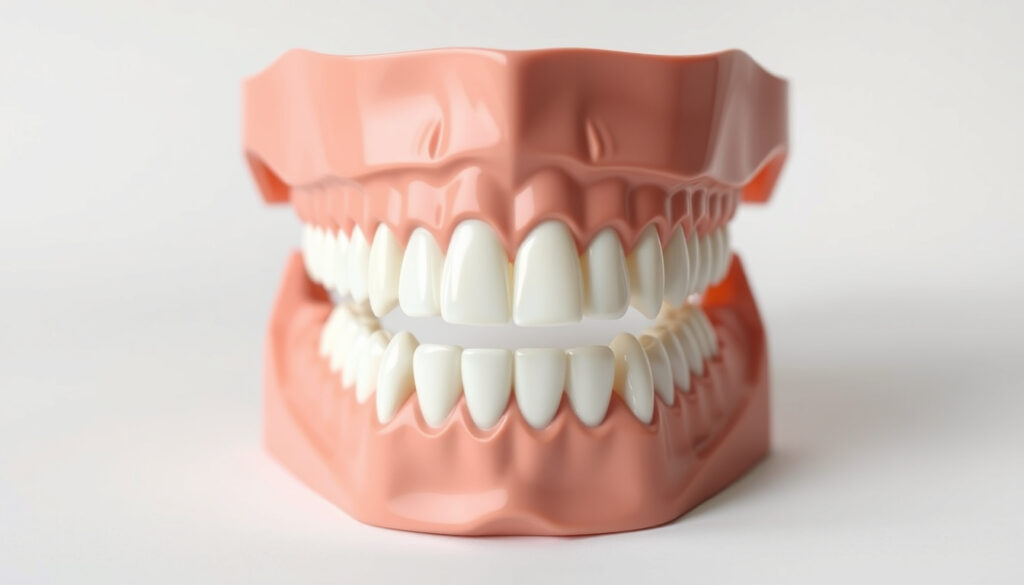
How Many Teeth Do Humans Have? 32 Adult Teeth Guide
If you’ve ever caught yourself counting your teeth with your tongue after a dental cleaning, you’re not alone — most people have wondered at some point. Adults typically have 32 permanent teeth, while children sport 20 primary ones (MouthHealthy (American Dental Association)). From the first baby tooth that pops through around six months to the full adult set by your early twenties, your smile tells a story across your entire lifespan.
Adult permanent teeth: 32 · Baby teeth: 20 · Incisors per adult: 8 · Canines per adult: 4 · Premolars per adult: 8
Quick snapshot
- Adults have 32 permanent teeth per MouthHealthy (American Dental Association)
- 16 teeth in upper jaw and 16 in lower jaw per CranioCatch dental resource
- Children typically have 20 primary teeth per Ubie Health medical resource
- 8 incisors, 4 canines, 8 premolars, 12 molars (including 4 wisdom teeth) per Colgate oral health authority
- Exact senior tooth retention varies by individual dental care
- Prevalence of hypodontia (missing teeth) differs by population
- Regional variations in tooth count not well-documented
- Baby teeth erupt starting at 6 months per MouthHealthy (American Dental Association)
- Primary teeth complete by ages 2-3 per Healthline health information
- Permanent teeth fully erupted by age 21 per MouthHealthy (American Dental Association)
- Tooth loss in seniors often begins after age 65 with proper care
- Regular dental checkups help preserve the full adult set
- Early intervention for crowding or impaction prevents complications
Five key numbers tell the story of human dentition across a lifetime. The difference between childhood and adulthood, the distribution between upper and lower jaws, and the role each tooth type plays — these are the patterns worth knowing.
| Attribute | Count |
|---|---|
| Total adult teeth | 32 |
| Wisdom teeth | 4 |
| Child primary teeth | 20 |
| Incisors | 8 |
| Premolars | 8 |
| Adult teeth without wisdom | 28 |
| Upper jaw adult teeth | 16 |
| Lower jaw adult teeth | 16 |
| Canines | 4 |
| Molars (permanent) | 12 |
Do we have 32 or 36 teeth?
Most adults have 32 permanent teeth, not 36. The confusion sometimes arises because people include wisdom teeth or hear different counts depending on whether someone has had extractions. A normal adult typically has 32 teeth, divided into four main groups: incisors, canines, premolars, and molars (CranioCatch dental resource).
Including wisdom teeth
Wisdom teeth — the third molars at the very back of your mouth — count toward the total of 32. That means the adult set includes 4 wisdom teeth, 12 molars total, 8 premolars, 4 canines, and 8 incisors (Ubie Health medical resource). Wisdom teeth typically emerge between ages 17 and 25, though not everyone develops them.
Without wisdom teeth
Many adults end up with 28 teeth after wisdom tooth extraction. This is common because wisdom teeth often become impacted, crowd other teeth, or prove difficult to clean properly. The removal of all four wisdom teeth leaves you with the same functional tooth types — just without the third molars.
Adults have 32 teeth, 12 more than the 20 baby teeth children have (SuperSmile dental care blog). Knowing whether your count includes or excludes wisdom teeth explains why dental sources sometimes differ by four.
Colgate (Oral health authority) states:Children have 20 teeth, adults 32 (28 without wisdom).
How many teeth does a child have?
Children typically have 20 primary (baby) teeth, also called deciduous teeth. These start erupting at about 6 months of age, and most children have their full set by age 3 (Medical News Today health information). The primary set serves as placeholders for the permanent teeth that will eventually replace them.
Primary teeth breakdown
Like adult teeth, primary teeth come in different types. Children have 8 incisors, 4 canines, and 8 molars — but notably, no premolars. The primary molars are larger than their permanent premolar successors and serve the same grinding function until the permanent teeth emerge.
Transition to permanents
Children begin losing baby teeth around ages 5 or 6, starting with the lower incisors. The permanent teeth start growing in at about age five with the lower incisors (CariFree dental resource). By the teenage years, most children have their permanent set — minus wisdom teeth, which come later.
Kids get permanent teeth ages 6-12, reaching 28 teeth by age 13 (The Super Dentists pediatric dental practice). The final four wisdom teeth complete the adult set in the late teens to early twenties.
MouthHealthy (American Dental Association) (Official eruption authority) states:At birth people usually have 20 baby (primary) teeth, which start to come in (erupt) at about 6 months of age.
How many teeth do humans have top and bottom?
Adults have 16 teeth in the upper jaw (maxilla) and 16 teeth in the lower jaw (mandible). This symmetrical distribution means exactly half your teeth sit above the midline of your mouth and half below.
Upper jaw count
The upper jaw contains the full range of tooth types: 4 incisors, 2 canines, 4 premolars, and 6 molars (including 2 wisdom teeth on top). The upper teeth often appear more visible when you smile, which is why cosmetic dentistry frequently focuses on the maxillary anterior region.
Lower jaw count
The lower jaw mirrors the upper with 16 teeth: 4 incisors, 2 canines, 4 premolars, and 6 molars (including 2 wisdom teeth on bottom). The mandible’s teeth are generally smaller than their maxillary counterparts and handle the grinding portion of chewing.
How many premolars do we have?
Adults have 8 premolars total — 2 in each quadrant of the mouth. Premolars sit between the canines and molars, serving as transitional teeth that help tear and crush food before it reaches the molars for final grinding.
Role in dentition
Premolars are unique to permanent dentition; children have no premolars. The 8 premolars replace the 8 primary molars. Each premolar has a broad biting surface with at least two cusps, making them effective at transitioning food from the sharper canines to the grinding molars.
Positioning
First premolars (often called bicuspids) sit directly behind the canines, with second premolars following. The upper first premolars are sometimes called “two-headed monsters” due to their size and the complexity of their root systems.
Premolars are the most commonly extracted teeth for orthodontic treatment, as their mid-mouth position makes them ideal for creating space to correct crowding (Belmont Dentistry dental practice).
How many 70 year olds still have all their teeth?
Tooth retention in seniors varies significantly based on lifetime dental care, genetics, and access to dental services. Research shows that tooth loss increases substantially after age 65, though the average number of remaining teeth has improved in recent decades thanks to better preventive care.
Senior tooth retention rates
Studies indicate that the average senior over 65 has lost several teeth, with many having between 18 and 24 remaining teeth. Complete tooth loss (edentulism) affects a smaller percentage of seniors than in previous generations, though it remains a concern for those without regular dental access.
Factors for loss
Tooth loss in seniors typically results from untreated decay, periodontal disease, or a combination of both. Factors that preserve teeth into seniority include regular dental cleanings, good oral hygiene habits, managing diabetes, and avoiding tobacco products.
Upsides
- Improved preventive care helps more seniors keep natural teeth
- Regular cleanings and fluoride treatments extend tooth longevity
- Dental implants offer replacement options when tooth loss occurs
Downsides
- Tooth loss accelerates without early intervention
- Gum disease remains the leading cause of tooth loss in adults
- Not everyone has equal access to preventive dental care
Animal teeth comparisons
Humans fall in the middle range for tooth counts among mammals. While some animals have thousands of teeth — certain fish can have hundreds of tiny teeth replaced continuously — human dentition reflects our omnivorous diet and moderate-sized jaws.
Animals with extreme tooth counts
Some species make dental records look trivial. The giant armadillo has the most teeth of any land mammal, with up to 100 teeth in its long snout. In contrast, certain dolphins can grow and replace teeth throughout their lives, accumulating thousands over a lifetime.
Animals with few or no teeth
Birds have no teeth in their beaks. Anteaters lack teeth entirely, using their long tongues to capture ants and termites instead. Among mammals, the giant panda — despite being a bear — has relatively simple teeth adapted for its bamboo diet.
CranioCatch (Dental resource) states:A normal adult typically has 32 teeth, divided into four main groups: incisors, canines, premolars, and molars.
The implication: Your 32 teeth represent a carefully balanced system that evolved over millions of years. Whether you keep all of them depends largely on the dental care decisions you make starting in childhood and maintaining through your senior years.
Related reading: Symptoms of Yeast Infection · Best Tea for Sore Throat
While adults typically have 32 permanent teeth including wisdom molars, 32 vs 28 adult teeth guide explores why many sources cite only 28.
Frequently asked questions
How many teeth do dogs have?
Adult dogs have 42 permanent teeth, while puppies have 28 baby teeth. Dogs have four types of teeth: incisors, canines, premolars, and molars, with the premolars and molars being particularly well-developed for their carnivorous diet.
What animal has no teeth at all?
Birds and anteaters are among the animals that have no teeth. Birds use their beaks for various tasks, while anteaters capture insects with their long, sticky tongues. Even some reptiles, like turtles, lack teeth.
Can a dentist pull all your teeth at once for dentures?
While technically possible, dentists typically remove teeth in stages to promote healing and minimize complications. Immediate dentures can be fitted before extraction, but staged removal allows better recovery and fitting adjustments over time.
At what age do seniors start losing teeth?
Tooth loss in seniors often accelerates after age 65, though it varies significantly based on lifetime oral health. With proper care, many seniors maintain most or all of their natural teeth well into their 80s.
Which animal has 700,000 teeth?
No land animal has 700,000 teeth at once. Some fish, like certain species of minnows, can have hundreds of teeth replaced continuously throughout their lives. The figure sometimes mentioned for farm-raised fish reflects cumulative tooth production, not a single jaw count.
For anyone concerned about their tooth count: the most important number to track is not how many teeth you have, but whether you’re keeping them healthy enough to keep them. A full set of 32 means little if periodontal disease or decay compromises them.
More related posts
 T-Mobile Customer Service Number: 1-800-937-8997 & 611
 Cleaning Service Near Me: Prices, What to Expect & How to Choose
 Miami Dolphins vs Indianapolis Colts Match Player Stats: Final Score and Key Performances
 Best Calorie Counter App 2025: Cronometer, MyFitnessPal & More
 Are Bananas Good for Dogs? Benefits, Risks, and Serving Guide
 Is Ozzy Osbourne Dead – Heavy Metal Icon Passes at 76
 Mexico vs Saudi Arabia: Soccer H2H, 2022 & 2025 Matches
 Sermorelin Before and After – Realistic Results and Timelines