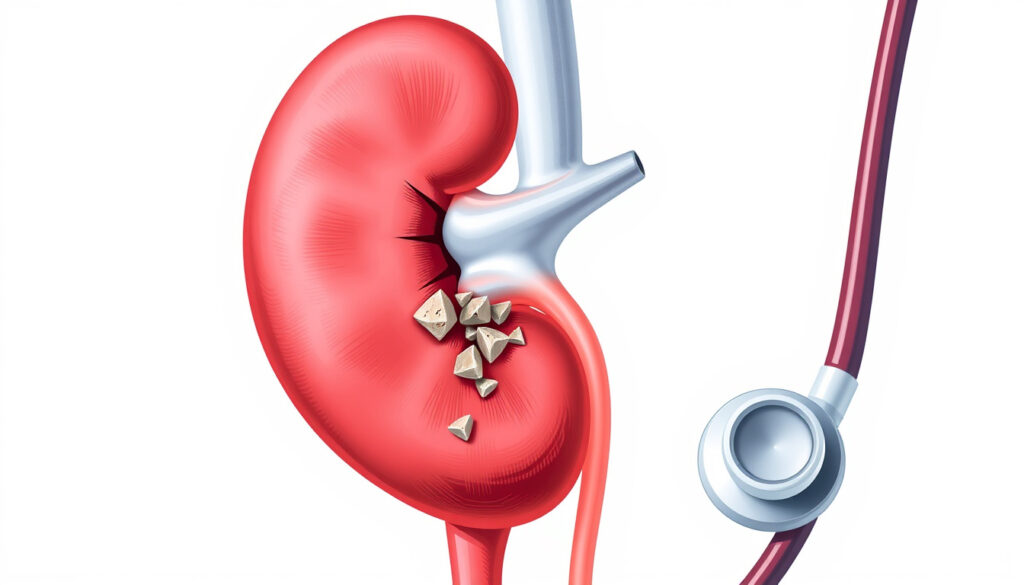
Signs of Kidney Stones: Warning Symptoms and When to Seek Help
If a sharp, cramping pain in your lower back or side has ever sent you searching for answers, you’re not alone — and your first thought might not be kidney stones. About 1 in 10 people will experience a kidney stone at some point, and the symptoms can mimic everything from a back strain to appendicitis. This guide walks through the early warning signs, how to tell them apart from other conditions, and when a trip to the emergency room is non-negotiable.
Affects approximately: 1 in 10 people ·
Recurrence rate within 5–10 years: up to 50% ·
Most common stone type: calcium oxalate ·
Annual U.S. emergency visits for kidney stones: over 1 million ·
Percentage of stones that pass spontaneously: about 60%
Quick snapshot
- Sudden severe flank or abdominal pain is the hallmark symptom (NHS (UK health authority))
- Blood in urine is a common sign from stone irritation (Cleveland Clinic (urology specialists))
- Small stones under 5 mm often pass without surgery (NHS (UK health authority))
- Exact cause in individual cases often remains unknown (Leeds Teaching Hospitals NHS Trust (clinical service))
- Very small stones may pass painlessly in urine without symptoms (NHS (UK health authority))
- Passing a small stone may take a few weeks (NHS (UK health authority))
- Larger stones above 7 mm usually require medical treatment (MedlinePlus (U.S. National Library of Medicine))
- Fever or chills alongside urinary symptoms signals possible infection (MedlinePlus (U.S. National Library of Medicine))
- Severe pain that won’t go away requires medical help (MedlinePlus (U.S. National Library of Medicine))
- Inability to urinate is an emergency situation (MedlinePlus (U.S. National Library of Medicine))
Four key facts, one pattern: kidney stone risk is widespread, recurrence is common, and most stones are calcium-based.
| Fact | Value |
|---|---|
| Prevalence | 1 in 10 people will experience a kidney stone at some point |
| Recurrence | 50% chance of another stone within 10 years |
| Most common type | Calcium oxalate (about 80% of stones) |
| Average passage time | Small stones may pass in days to weeks; larger stones may require intervention |
What Are the First Signs of Kidney Stones?
Typical pain location and sensation
- The pain commonly starts in the side of the tummy, abdomen, back, or flank and can radiate to the groin or testicle or labia as the stone moves (MedlinePlus (U.S. National Library of Medicine))
- The pain often comes in waves and can be severe, cramping, or colicky (NHS (UK health authority))
- If a stone blocks the ureter, it can cause swelling of the kidney and spasm of the ureter, producing intense pain (Mayo Clinic (academic medical center))
The pattern: kidney stone pain is not a dull ache — it’s a wave-like, severe cramp that shifts location as the stone moves through the urinary tract.
Anyone with sudden flank pain that radiates to the groin should suspect a stone, not assume a pulled muscle — especially if the pain comes in waves and makes it impossible to sit still. That distinction alone can save hours of diagnostic delay.
The 7 warning signs vs the 5 warning signs
- Sudden severe flank or abdominal pain
- Blood in urine (pink, red, or brown) — visible or only detected on testing (NHS (UK health authority))
- Nausea and vomiting commonly accompany the pain (NHS (UK health authority))
- Burning sensation when urinating when the stone nears the bladder (Leeds Teaching Hospitals NHS Trust (clinical service))
- Persistent need to urinate or urinating in small amounts (Mayo Clinic Health System (regional healthcare network))
- Fever or chills can indicate an accompanying infection (MedlinePlus (U.S. National Library of Medicine))
- Cloudy or foul-smelling urine may signal infection (MedlinePlus (U.S. National Library of Medicine))
These seven signs cluster into two groups: pain-plus-urinary changes (the core stone picture) and infection indicators (fever, chills, foul urine) that raise the stakes.
Symptoms in men versus women
- Men may feel pain radiating to the testicle or tip of the penis as the stone moves into the lower ureter (Leeds Teaching Hospitals NHS Trust (clinical service))
- Women may feel pain radiating to the labia, and gynecological pain from ovarian cysts can mimic stone pain — the key difference is that stone pain is not cyclical (Mayo Clinic Health System (regional healthcare network))
- Nausea and vomiting affect both sexes equally when pain is severe (NHS (UK health authority))
The implication: pain location shifts by anatomy, but the core symptom pattern — wave-like severe pain with urinary changes — is consistent across genders.
What Could Be Mistaken for Kidney Stones?
A patient who mistakes kidney stone pain for a back strain may delay treatment for hours. One who mistakes appendicitis for a stone may risk a ruptured appendix. The cost of misidentification is high on both sides.
Four common lookalikes, one pattern: each mimics stone pain but has a distinctive feature that allows a careful clinician — or a well-informed patient — to tell them apart.
| Condition | Pain location | Key distinguishing feature | Stone similarity |
|---|---|---|---|
| Urinary tract infection (UTI) | Lower abdomen, suprapubic | Burning during urination and frequent urgent urination are dominant (MedlinePlus (U.S. National Library of Medicine)) | Burning urination also occurs when a stone nears the bladder |
| Appendicitis | Starts near navel, migrates to lower right abdomen | Pain localizes to McBurney’s point; nausea and fever may follow | Nausea and right-sided pain overlap with stone symptoms |
| Ovarian cyst or ectopic pregnancy | Lower abdomen, one side | Pain is often cyclical or linked to menstrual phase; ectopic pregnancy may cause vaginal bleeding | Unilateral lower abdominal pain mimics a stone in the lower ureter |
| Back muscle strain | Lower back, unilateral or bilateral | Pain worsens with movement and specific positions; no urinary symptoms (Mayo Clinic Health System (regional healthcare network)) | Flank pain can be mistaken for muscular back pain |
The trade-off: the presence of urinary symptoms (blood, burning, frequency) strongly favors a stone or UTI over muscle or gynecological causes, while fever and migrating pain point toward infection or appendicitis. When in doubt, urine testing and imaging settle it.
How to Check Yourself for Kidney Stones?
Monitoring urine color and odor
- Pink, red, or brown urine suggests blood from stone irritation — visible blood is a strong signal (NHS (UK health authority))
- Non-visible blood may only be detected by urine testing, not by the patient at home (North Tees and Hartlepool NHS Foundation Trust (clinical service))
- Cloudy or foul-smelling urine can indicate infection and should raise concern (MedlinePlus (U.S. National Library of Medicine))
Using a urine strainer at home
- Straining urine through a fine mesh or gauze can catch passed stones for analysis (NHS (UK health authority))
- A caught stone can be tested for composition, which guides prevention strategies
- Home checks cannot definitively diagnose stones — only imaging can confirm size and location
When to seek medical imaging
- CT scan is the gold standard for detecting kidney stones and assessing size and location (MedlinePlus (U.S. National Library of Medicine))
- Ultrasound is an alternative that avoids radiation and can detect larger stones
- Seek imaging if pain is severe, persistent, or accompanied by fever or vomiting (MedlinePlus (U.S. National Library of Medicine))
The catch: home checks are useful for monitoring and catching stones, but they cannot rule out a stone that’s causing damage. If pain is severe or fever develops, home monitoring ends and medical evaluation begins.
Do Kidney Stones Go Away on Their Own?
Size determines passage likelihood
- Stones smaller than 5 mm often pass spontaneously within days to weeks (NHS (UK health authority))
- Stones larger than 7 mm usually require medical treatment such as lithotripsy or ureteroscopy (MedlinePlus (U.S. National Library of Medicine))
- About 60% of stones pass spontaneously overall, with the rest needing intervention
Timeframe for passing a stone
- Passing a small stone may take a few weeks from the onset of symptoms (NHS (UK health authority))
- Stones in the lower ureter tend to pass faster than those in the upper ureter or kidney
- Hydration and movement may help, but there is no guaranteed home method to speed passage
When medical intervention is necessary
- Severe pain that cannot be managed with over-the-counter medication warrants a doctor’s visit (MedlinePlus (U.S. National Library of Medicine))
- Fever or chills alongside stone symptoms signals infection and requires urgent care (MedlinePlus (U.S. National Library of Medicine))
- Inability to urinate is an emergency — the stone may be blocking both kidneys or the bladder outlet
A patient with a 4 mm stone and manageable pain can reasonably try to pass it at home with hydration and over-the-counter relief. But the same patient with a fever or intractable vomiting needs emergency care — the difference is not the stone size but the body’s response.
What Drink Breaks Up Kidney Stones?
Water as the primary preventive drink
- No drink truly dissolves existing stones; water helps flush small stones through the urinary tract (NHS (UK health authority))
- High fluid intake — enough to produce clear or light-colored urine — reduces stone formation risk (Leeds Teaching Hospitals NHS Trust (clinical service))
- Aim for 2–3 liters of fluid daily, spread throughout the day
Lemon juice and citrate content
- Citrate from lemon juice may inhibit calcium stone formation by binding calcium in urine (Cleveland Clinic (urology specialists))
- Lemon water is a reasonable addition to a hydration plan but is not a standalone treatment
- Orange juice also contains citrate, but its sugar content may offset benefits
Drinks that increase stone risk
- Sugar-sweetened beverages and colas raise the risk of kidney stone formation (Mayo Clinic Health System (regional healthcare network))
- High-sodium drinks and sports drinks can increase calcium excretion in urine
- Grapefruit juice has been linked to increased stone risk in some studies
The pattern: water is the foundation, citrate drinks may help modestly, and sugary or high-sodium beverages actively work against stone prevention. No drink dissolves a stone that’s already formed.
How to Manage a Kidney Stone at Home: A Step-by-Step Guide
Home management only works for small stones (under 5 mm) without signs of infection. If you develop fever, chills, or cannot keep fluids down, these steps stop and you need medical care.
- Hydrate aggressively. Drink 2–3 liters of water daily to increase urine flow and help move the stone along (NHS (UK health authority)). Clear or light-colored urine is your target.
- Use a urine strainer. Urinate through a fine mesh or cheesecloth to catch the stone when it passes. This allows analysis of its composition (NHS (UK health authority)).
- Manage pain with over-the-counter medication. Ibuprofen or naproxen can help with the cramping pain. Paracetamol (acetaminophen) is an alternative, though it has less anti-inflammatory effect.
- Monitor urine color and symptoms. Watch for pink or brown urine (blood), cloudy or foul-smelling urine (possible infection), and fever or chills. Any of those signal a need for medical evaluation (MedlinePlus (U.S. National Library of Medicine)).
- Know when to stop. If pain becomes unbearable, you develop fever or vomiting, or you cannot urinate, go to the emergency room immediately.
The steps above apply only to small stones without complications; any red flags require immediate medical attention.
What’s Confirmed and What’s Still Unclear
Confirmed facts
- Severe, wave-like flank pain is the hallmark symptom (NHS (UK health authority))
- Blood in urine is a common sign from stone irritation (Cleveland Clinic (urology specialists))
- Small stones under 5 mm often pass without surgery within weeks (NHS (UK health authority))
- High fluid intake reduces stone formation risk (Leeds Teaching Hospitals NHS Trust (clinical service))
- Fever alongside stone symptoms indicates possible infection requiring urgent care (MedlinePlus (U.S. National Library of Medicine))
What’s unclear
- Exact cause in individual cases often remains unknown (Leeds Teaching Hospitals NHS Trust (clinical service))
- Effectiveness of home remedies like apple cider vinegar or herbal teas is not proven
- Whether dietary changes alone can prevent recurrence in all patients — some people form stones despite optimal diet
- Why some people pass stones easily while others with the same size stone require intervention
- Whether lemon juice or other home remedies effectively prevent or treat stones is not well-studied
The balance of evidence supports clear guidance on symptom recognition and when to seek care, while some prevention strategies remain individual.
Expert Perspectives on Kidney Stones
“The pain from a kidney stone often comes in waves and can be severe, cramping, or colicky — it’s the kind of pain that makes people restless and unable to find a comfortable position.”
NHS (UK health authority)
“Kidney stones are tiny and painful but treatable. One of the most common misconceptions is that the pain is in the back — it often starts in the back but radiates to the groin as the stone moves.”
“When a stone is near the bladder, patients may experience a burning sensation during urination or a persistent need to urinate — symptoms that are easily confused with a urinary tract infection.”
“Fever or chills alongside urinary symptoms can indicate infection rather than an uncomplicated stone. This distinction is critical because an infected stone requires urgent treatment.”
MedlinePlus (U.S. National Library of Medicine)
These expert perspectives highlight the key differentiators for patients and clinicians alike.
Frequently Asked Questions
Can kidney stones cause fever?
Yes — fever or chills alongside kidney stone symptoms can indicate that an infection is present. This requires urgent medical attention because an infected stone can lead to sepsis (MedlinePlus (U.S. National Library of Medicine)).
Is kidney stone pain constant or does it come and go?
Kidney stone pain typically comes in waves. It is often described as colicky — severe cramping that peaks and then subsides as the ureter spasms around the stone. Between waves, there may be relative relief (NHS (UK health authority)).
How long does it typically take to pass a kidney stone?
For small stones (under 5 mm), passage may take a few days to a few weeks. Stones in the lower ureter tend to pass faster than those higher up. Stones larger than 7 mm often require medical treatment and may not pass on their own (NHS (UK health authority)).
Can drinking more water help prevent kidney stones?
Yes — high fluid intake is one of the most effective prevention strategies. Drinking enough water to produce clear or light-colored urine dilutes stone-forming substances and reduces the risk of new stones forming (Leeds Teaching Hospitals NHS Trust (clinical service)).
What does kidney stone pain feel like compared to back pain?
Kidney stone pain is typically a severe, wave-like cramp that starts in the flank or back and radiates to the groin. Unlike muscular back pain, it does not worsen with specific movements and is often accompanied by nausea or urinary symptoms (Mayo Clinic Health System (regional healthcare network)).
Are kidney stones more common in men or women?
Kidney stones are more common in men overall, though the gap has narrowed in recent decades. Men typically experience stones at a higher rate, but women are more likely to develop stones during pregnancy or after menopause. Both sexes can experience the same range of symptoms (Cleveland Clinic (urology specialists)).
Can kidney stones cause permanent kidney damage?
Prolonged blockage from a large stone can cause hydronephrosis (swelling of the kidney) and potentially permanent kidney damage if left untreated. This is why stones that do not pass within a reasonable timeframe, or that cause severe pain or infection, require medical intervention (Mayo Clinic (academic medical center)).
Understanding these common questions can empower patients to make informed decisions about their symptoms and care.
For anyone experiencing sudden flank pain, recognizing the pattern of kidney stone symptoms can lead to faster diagnosis and appropriate care, while ignoring warning signs like fever can result in serious complications.
More related posts
 Liverpool vs Atlético Madrid: 3-2 Win & Head-to-Head
 All in the Family Cast: Who’s Still Alive and Where Now
 Doughnut Chain Chapter 11: Jack’s Donuts Bankruptcy Filing
 68 kg to lbs: Convert 68 kg to Pounds and Stones
 T-Mobile Customer Service Number: 1-800-937-8997 & 611
 Fastest Animal in the World: Speed Records Across Air, Land, Sea
 Hot Springs National Park: Guide to Springs, Hikes & Bathhouses
 Food Trucks Near Me in Ireland: Costs, Licenses & Menu Items